
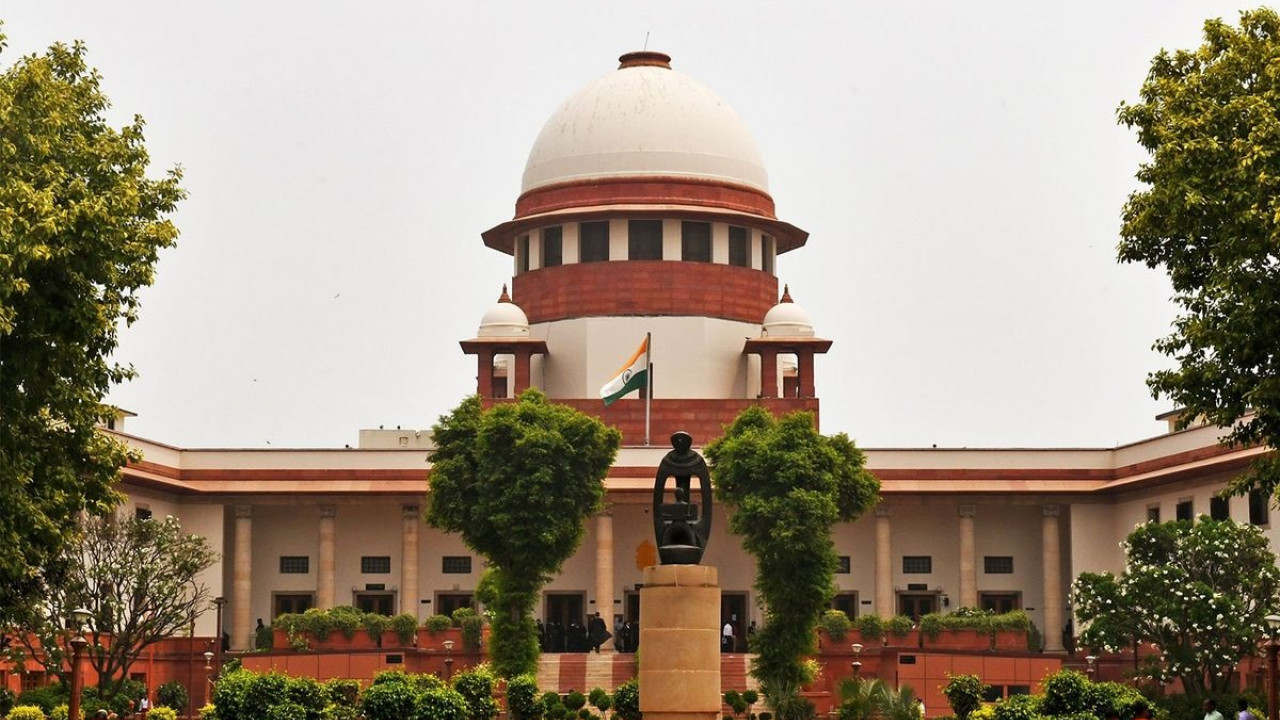
New Delhi: The Supreme Court has expressed concern over the shutdown of metro and train services ahead of the Cockroach Janata Party (CJP) protest on October 10. The Supreme Court said on Friday that “a big hammer cannot be used to kill a fly.”
The Supreme Court stated that people come to Delhi to earn their livelihoods. It stated that rules and regulations can be enforced, but you can’t stop everything. The court asked the government to reconsider its decision to close metro stations and cancel trains at New Delhi and Nizamuddin stations.
Expressing concern for commuters, the court told the central government that everything cannot be shut down, as people travel to and from all parts of the city. It also asked for a reconsideration of the restrictions imposed on metro and trains.
The court told the Centre, “Everyone, young and old, travels. Passengers have a right to basic amenities.”
‘There’s a difference between banning and shutting down’
The court said the number of closed metro stations should be reduced. It also said there was a difference between imposing restrictions and closing them completely. The court made these observations while hearing a petition filed by CPM General Secretary M.A. Baby, opposing the closure of metro stations and cancellation of trains.
The government has closed 57 metro stations ahead of the Cockroach Janata Party (CJP) protest on October 10th. Entry and exit at these metro stations will be closed starting at 9 pm tonight. Additionally, several trains arriving at New Delhi and Hazrat Nizamuddin stations on October 10th have also been cancelled.
Senior advocate Kapil Sibal, appearing for the petitioner, told the court, “All trains have been cancelled, metro stations are closed. You cannot go anywhere. What is happening in my country? This is a peaceful protest.”
Chief Justice Surya Kant told Solicitor General Tushar Mehta, “Our primary concern is the complete closure of the entry gates of these metro stations. Our concern is not about any particular protester or individual, but about the hundreds of thousands of commuters who travel to and from Gurugram, Greater Noida, East Delhi, and South Delhi for their livelihood.”
‘You can’t stop everything’
The Supreme Court clarified that it was not looking at the issue of protests, but only at the facilities for citizens. While supporting the right of the authorities to impose security measures before the protest, the court also asked them to take into account the convenience of the general public.
The court said, “Law enforcement officers certainly have the right to enforce rules and regulations. There’s no doubt about that. If you want to stop uncontrolled movement, you’re free to do so. However, that doesn’t mean you should bring everything to a standstill and leave people without any means of transportation.”
The court said, “Not everyone has a car or a private vehicle. People depend on public transport. Such a move is not practical.” Responding to the court’s comments, Solicitor General Tushar Mehta said that he will consult the government and assured that appropriate steps will be taken.