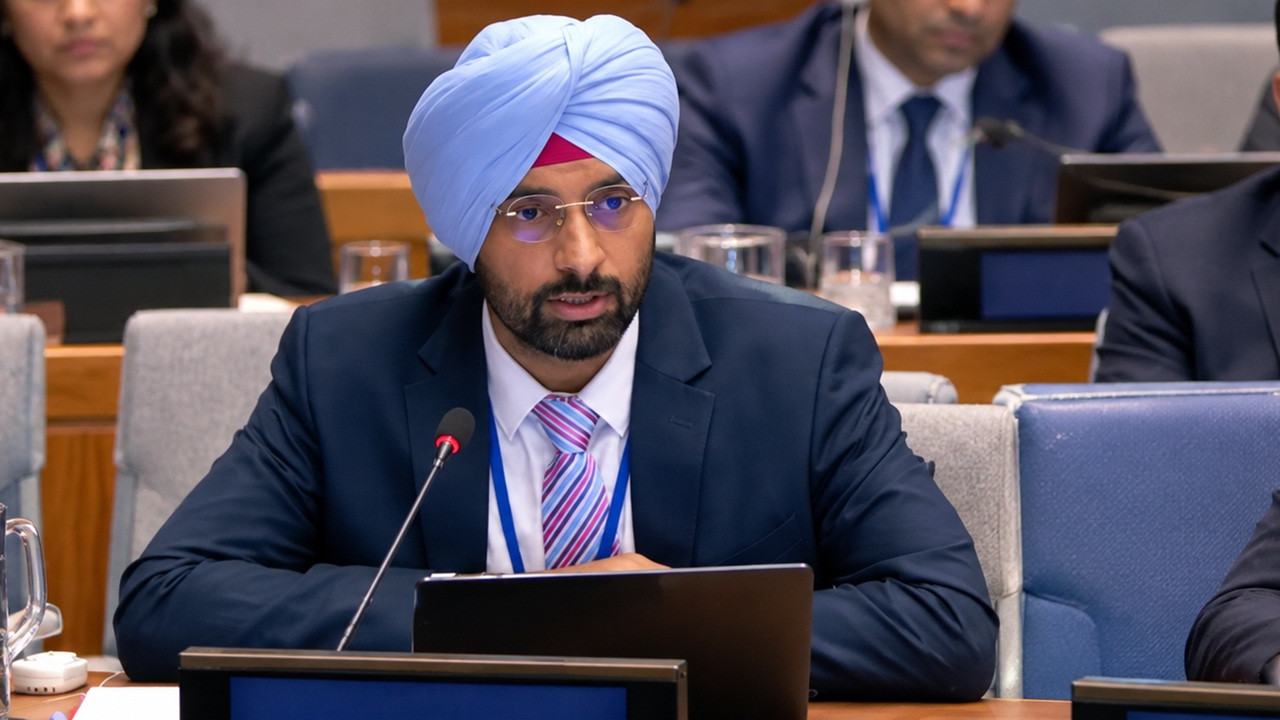
Geneva: In the First Committee of the United Nations General Assembly, India gave a strong message to Pakistan on the issue of nuclear weapons and terrorism. Indian representative Anmol Sher Singh Bedi said that nuclear weapons cannot be used as a tool of pressure in everyday diplomacy. India will not bow down to any kind of nuclear threat or blackmailing. He clarified that India’s security policy and defence capabilities are determined by the security environment of the country. India raised questions on Pakistan’s policies by raising issues related to terrorism, Jammu and Kashmir and illegal proliferation of nuclear technology at the international forum.
What answer did India give to Pakistan on J&K?
After Pakistan raised the issue of Jammu and Kashmir, India reiterated that the entire Jammu and Kashmir is an integral and indivisible part of the country. The Indian representative also demanded Pakistan give up its illegal occupation of Indian territories. India said that it is in favour of peace, but to maintain peace it is necessary to fix accountability for irresponsible activities. According to India, merely appealing for restraint will not solve the problem unless effective action is taken against incidents of violence and instigation.
What are India’s three main positions on terrorism?
India made its stand clear and said that any terrorist attack will be given a befitting reply. Secondly, India cannot be forced to change its decisions by threatening nuclear weapons. Thirdly, there will be no distinction in terms of responsibility between those who harbour terrorism and those who plot attacks. The Indian side also said that spreading violence through non-state actors does not absolve any country of its responsibility. Reiterating its right to self-defence, India said that security-related decisions are taken according to the circumstances of the country.
What was said in the Operation Sindoor and the Indus Water Treaty?
Referring to the Pahalgam terror attack, India said Operation Sindoor was a step taken in self-defence after the killing of 26 civilians. India defended its policy against terrorism, calling it a balanced action. On the Indus Water Treaty, India said that the agreement was based on mutual trust and goodwill. India’s stance is that the treaty will remain in abeyance until Pakistan takes concrete steps to permanently end cross-border terrorism. There is already tension between the two countries on this issue.
What warning did he give to the world on the illegal proliferation of nuclear technology?
India described the illegal proliferation of nuclear technology as a serious threat to global security. In this context, A.Q. referring to the mine network, the need for strict monitoring of the transfer of advanced nuclear technology and material was stressed. India appealed to responsible countries to exercise vigilance to prevent the spread of nuclear and other sensitive technologies. According to the Indian side, using the threat of nuclear weapons as diplomatic pressure can increase regional tensions. India made it clear that it wants peace but will not compromise its security in the face of terrorism and nuclear threats.