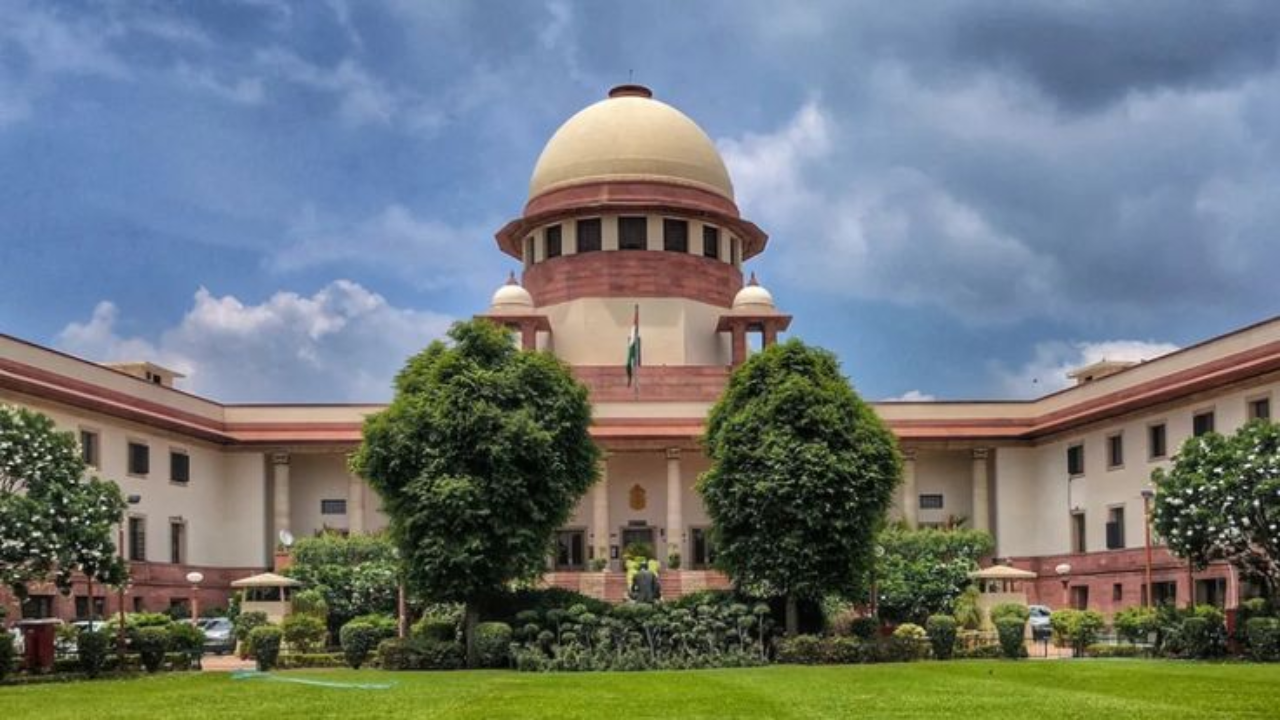
New Delhi: The Supreme Court has once again raised serious concerns over the transparency and security of the examination system while hearing the NEET-UG paper leak case. The court asked the Central Government and the National Testing Agency (NTA) to explain the concrete and long-term measures taken to prevent the recurrence of paper leak incidents. It emphasised that temporary solutions would not be enough and called for institutional reforms to strengthen the examination process. The court also directed the Centre and the NTA to file a detailed affidavit outlining the steps taken so far and their future action plan.
What did the Supreme Court judges say?
Justice P.S. Narasimha and Justice Alok Aradhe raised questions on the credibility of the examination system during the hearing. The court asked the central government whether any concrete plan has been prepared to conduct future examinations completely in Computer Based Test (CBT) mode and strengthen data security. The court said that to maintain the fairness of major competitive examinations conducted across the country, comprehensive reforms are necessary at both the technical and administrative levels.
On which points was information sought in the affidavit?
The Supreme Court asked the Centre and NTA that the affidavit should not only mention the claims made but also the actual progress of the reforms. The court has asked for a detailed account of the status of implementation of the recommendations of the high-powered committee, steps taken in key areas such as the proposed governing board, units of experts, digital infrastructure, cybersecurity, research and development, transparency, governance and human resources.
What was asked to be included in the status report?
The court has also sought a status report on the reforms done at each stage of the examination process—before, during and after the examination. Apart from this, instructions have also been given to provide information about the role of recently appointed Additional Directors General, security arrangements, monitoring system and vigilance measures. The court has also sought a detailed report on coordination with the state and district administration, multi-session examinations, examination centres, printing of question papers and safe transportation arrangements.
What did the court say on the deployment of Air Force?
During the hearing, Justice Narasimha remarked that taking the help of the Indian Air Force for safe transportation of the question papers was only a temporary solution. He said that such systems cannot remain in force for long and the government will have to develop a permanent, technology-based and reliable system. The court also sought information from the Centre on the possibilities of using modern technologies like DigiYatra for verification of candidates.
What will happen next now?
Solicitor General Tushar Mehta told the court that the government was preparing a detailed roadmap and some time was needed to file a fresh affidavit in this regard. On this, the Supreme Court listed the matter for next Monday and said that it will continuously monitor the entire matter. The court said in clear words that its objective is not just immediate reforms but to create such a strong examination system in which there will be no scope for incidents like paper leaks in the future.