
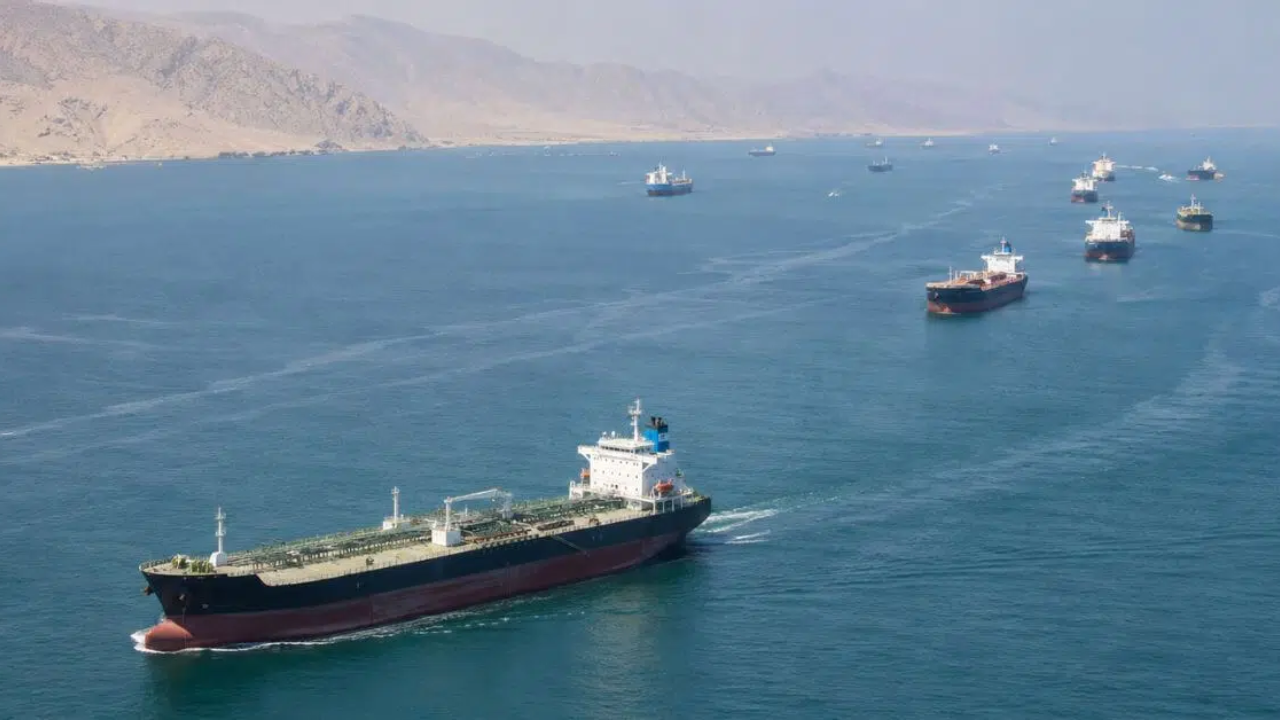
Tehran: Iran and Oman have reportedly reached an agreement regarding the Strait of Hormuz. If the deal is implemented successfully, the strategically vital waterway, which was disrupted during the US-Iran conflict, could soon reopen for global shipping. Until now, commercial vessels from all countries have been able to pass through the strait without paying transit fees or seeking permission from any single nation. However, that arrangement could change in the future.
What did Iran say?
Iran claims to have reached an agreement with Oman, which is its neighbor, concerning a new shipping passage through the Strait of Hormuz. According to reports, Iranian officials and regional sources said that under the proposed arrangement, any ship coming into the Strait of Hormuz will come under surveillance by Iran.
What agreement has been reached by Iran and Oman concerning the Strait of Hormuz?
Esmail Baghaei, who serves as a spokesman for Iran’s Foreign Ministry, said that Iran and Oman have reached an agreement on geographic coordinates for the new shipping passage through the strait. As per him, the two countries are now finalizing a joint statement containing details of the agreement reached.
Kazem Gharibabadi, Iran’s Deputy Foreign Minister, said the negotiations had reached basic agreements. He added, “The process is close to finalization.”
Iran has also said that the proposed arrangement has been designed in such a way that commercial ships will pass through Iranian waters on both the incoming and outgoing phases of their journey.
What will change for ships?
At present, vessels entering or exiting the Gulf travel along internationally recognized shipping lanes without needing clearance from either Iran or Oman. The suggested agreement will dramatically alter this system.
As per reports, vessels entering the Gulf will traverse through water bodies controlled by Iran. It will give Tehran the authority to regulate traffic through the Gulf region. The big question at this stage is whether Iran will have similar powers over vessels exiting the Gulf region.
Iran’s deputy foreign minister for legal and international affairs, Kazem Gharibabadi, said Tehran and Muscat were working on a “new model” to manage shipping through the Strait of Hormuz.
Under the proposed system, the majority of the designated shipping route will pass through Iranian waters, while a smaller portion will pass through Omani waters. Existing temporary shipping lanes, including the northern route near Iran’s Larak Island and the southern route through Omani waters, will be gradually eliminated and replaced by the new corridor.
He said the new route will initially be operational for two to four months, although it could continue for longer depending on how the system progresses.
Hormuz is often referred to as the world’s most important oil “chokepoint.” Nearly a fifth of the world’s oil supply passes through this narrow strait. Whichever country gains greater influence over shipping here will gain a significant strategic advantage in the global energy market.
Who will inspect the ships?
According to reports, officials in the region said that Gulf countries want the inspection to be conducted under regional supervision, not just by Iran. Negotiators are also debating whether there should be a payment or fee for access.
Iran wants a transit fee of 5 to 7 per cent of the cargo’s value. Oman is negotiating a much lower fee of around 3 per cent. Meanwhile, the US wants ships to continue using the Strait without paying any transit fees.
Why has the agreement not been finalised yet?
For now, some differences remain. An Iranian source said, “The real problem lies in the details. One tweet from Trump could ruin the whole thing.”
Iranian officials have also made it clear that reopening the Strait depends on Washington fully complying with its commitments under the Memorandum of Understanding (MoU) signed in June.