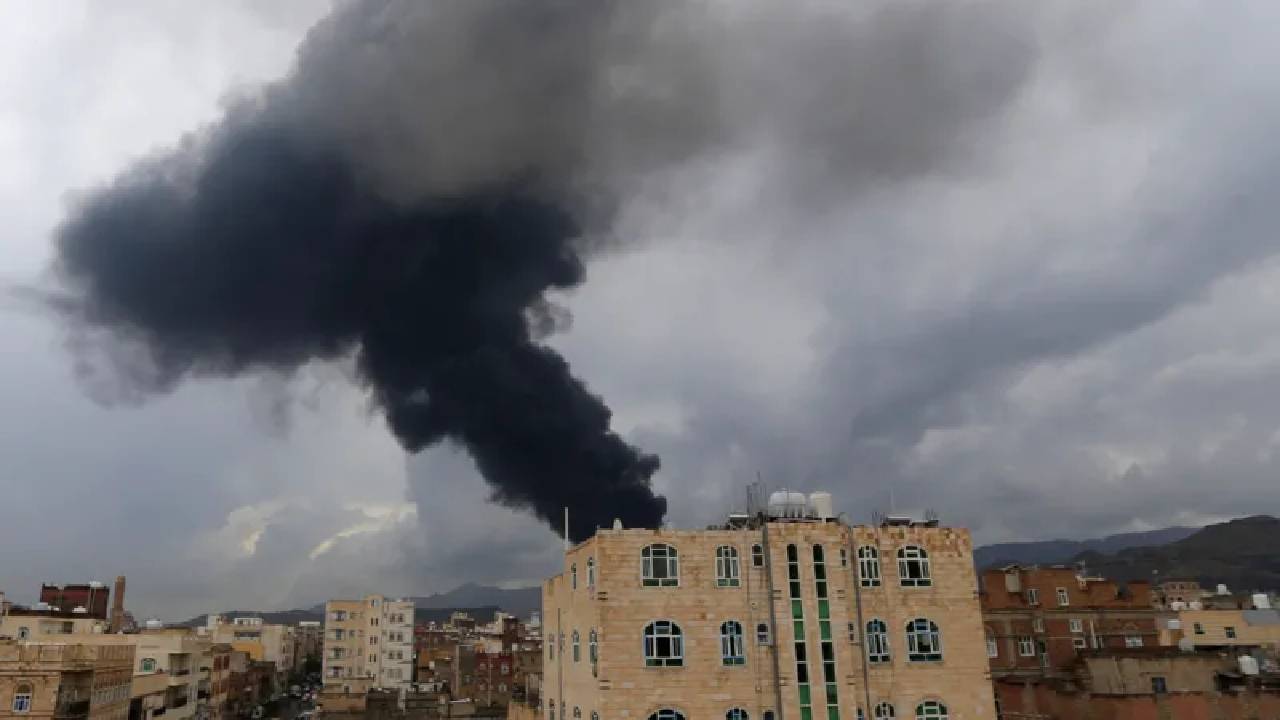
International News: On Sunday, Israeli fighter jets unleashed a series of powerful airstrikes on Yemen’s capital, Sanaa, targeting suspected Houthi installations. Several densely populated areas were struck, leaving at least two civilians dead and 35 others injured. Medical officials cautioned that the death toll could climb further as critically wounded victims continue to be rushed into overcrowded hospitals. The strikes have heightened fears of further escalation in an already volatile Middle East region.
Key Areas Hit
The airstrikes targeted regions near the presidential palace, a power plant, and a fuel storage facility. Israel stated that the strikes were in response to recent attacks by the Houthi militant group, who had launched drones and missiles at Israeli targets. The facilities struck were reportedly used by the Houthis for military purposes.
Emergency Response
Yemen’s Civil Protection Authority confirmed that firefighters are working to extinguish fires caused by the airstrikes in the southern and western parts of Sanaa. Hospitals are attending to the injured, and doctors warned that the death toll could increase as more victims arrive.
Details of the Airstrike
According to the Israeli Defense Ministry, 14 fighter jets participated in the operation, dropping nearly 40 bombs on the targeted areas. The strikes hit areas near the presidential palace, the Asr and Hejaz power plants, and a fuel storage facility. Israel said these sites were being used for Houthi military operations.
Houthi Reaction
The Houthi group condemned the attacks, accusing Israel of striking civilian facilities. They also held both Israel and the United States responsible, calling the airstrikes a serious violation of international law. The group warned that these attacks could escalate tensions further in the region.
Global and Humanitarian Concerns
Humanitarian organizations expressed concern over the strikes because Sanaa is densely populated. Experts urged all parties to avoid targeting civilians or critical infrastructure and stressed the importance of protecting non-combatants.Emergency crews continue to manage fires and assist the wounded. Authorities are monitoring the situation closely. International observers are also keeping a watch on the region, fearing that the conflict could intensify.