
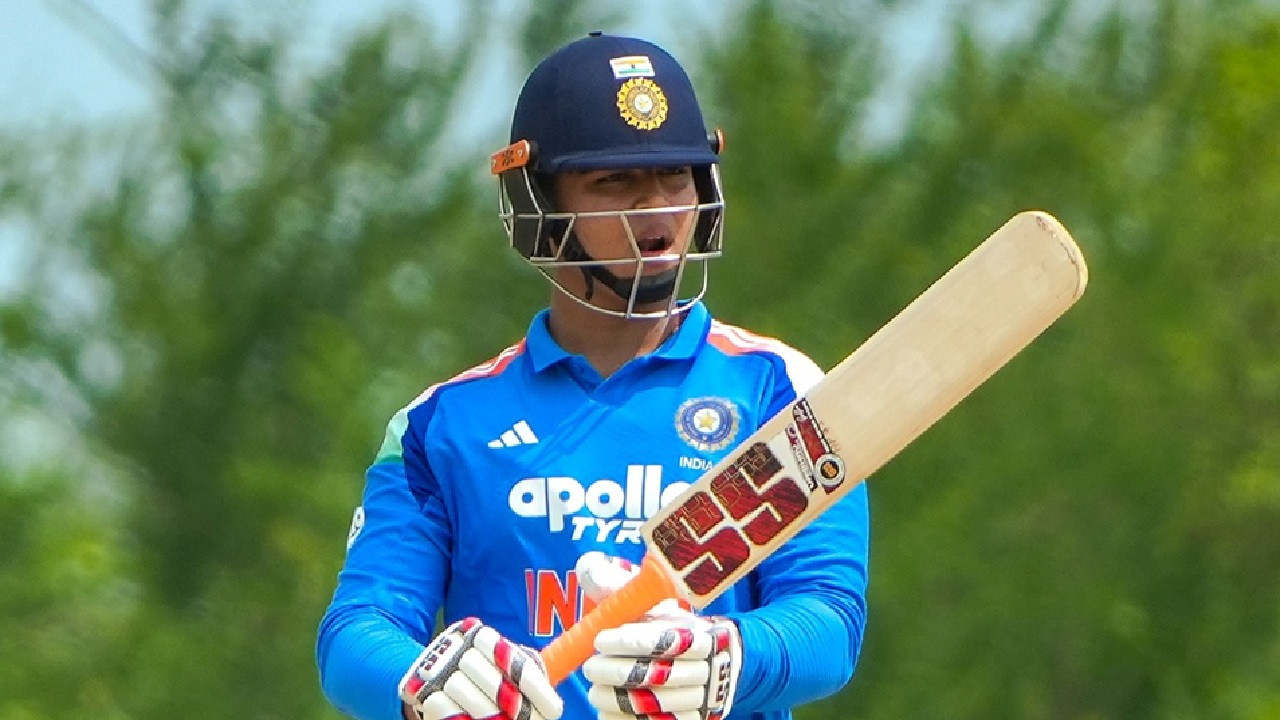
New Delhi: In the second T20 match against New Zealand, the Indian team won by four wickets and took a 2-0 lead in the series, but the batting position of young batsman Vaibhav Suryavanshi became a topic of discussion. In the match played at Hagley Oval in Christchurch, Vaibhav was fielded at number 3 instead of opening. However, he could not take advantage of this opportunity and was out after scoring just four runs in eight balls. Former Indian spinner Ravichandran Ashwin has raised questions about his performance and batting order.
Why was Vaibhav struggling while batting at number 3?
Vaibhav Suryavanshi had joined the playing eleven in place of injured Ishan Kishan. The Indian team retained its regular opening pair of Sanju Samson and Abhishek Sharma, due to which Vaibhav was sent to bat at number three. According to Ashwin, coming in to bat around the sixth over did not seem to suit Vaibhav’s natural game. He was seen continuously trying to play big shots, but his timing and rhythm were not right. Ashwin said that it would not be appropriate to declare a young player successful or unsuccessful so soon, but in this match he was not able to bat at his natural pace.
What kind of help should Vaibhav have got at the crease?
Ashwin said that on such an occasion, an experienced batsman should have gone to the young player and advised him to remain calm. According to him, instead of playing big shots on every ball, Vaibhav should have tried to concentrate on the ball and find his rhythm by playing it closer to the body. Batting under pressure in international cricket is challenging for young players. Ashwin believes that guidance from a teammate at the right time can help a batsman settle down and play in his natural style.
Travel Day ✅ Christchurch ✈️ Wellington #TeamIndia | #NZvIND https://t.co/yy66ry8zqR
— BCCI (@BCCI) October 25, 2026
Why was Sanju Samson advised to play at number three?
Ashwin suggested to the Indian team management that if Sanju Samson, Abhishek Sharma and Vaibhav Suryavanshi are to be kept together in the playing eleven, then Sanju can be considered at number 3. This will give Vaibhav a chance to bat in the opening, where he can feel more comfortable. The main basis of Ashwin’s advice is to strike a balance between the role of the batsmen and their natural style. However, the final decision has to be taken by the team management only.
Which batsmen played an important role in India’s victory?
Despite Vaibhav’s early dismissal, India chased the target of 181 runs and won by four wickets. The team was in trouble at one time, but Tilak Verma and Nitish Kumar Reddy changed the course of the match by making an unbeaten partnership. Tilak scored 51 not out, while Nitish played a useful inning of 26 not out off 13 balls. The unbroken partnership of 69 runs between the two for the seventh wicket was decisive in India’s victory. With this victory, India took a 2-0 lead in the five-match T20 series.
Should Vaibhav’s batting position be changed?
It is too early to judge the potential of a young batsman on the basis of one innings. However, Ashwin’s comment has definitely intensified the debate whether to maintain the team composition, whether the young player should be given a new role or whether he should be given the opportunity to play in his preferred position. Now the focus will be on whether the Indian team gives Vaibhav a chance to open in the upcoming matches or continues to rely on number-3.