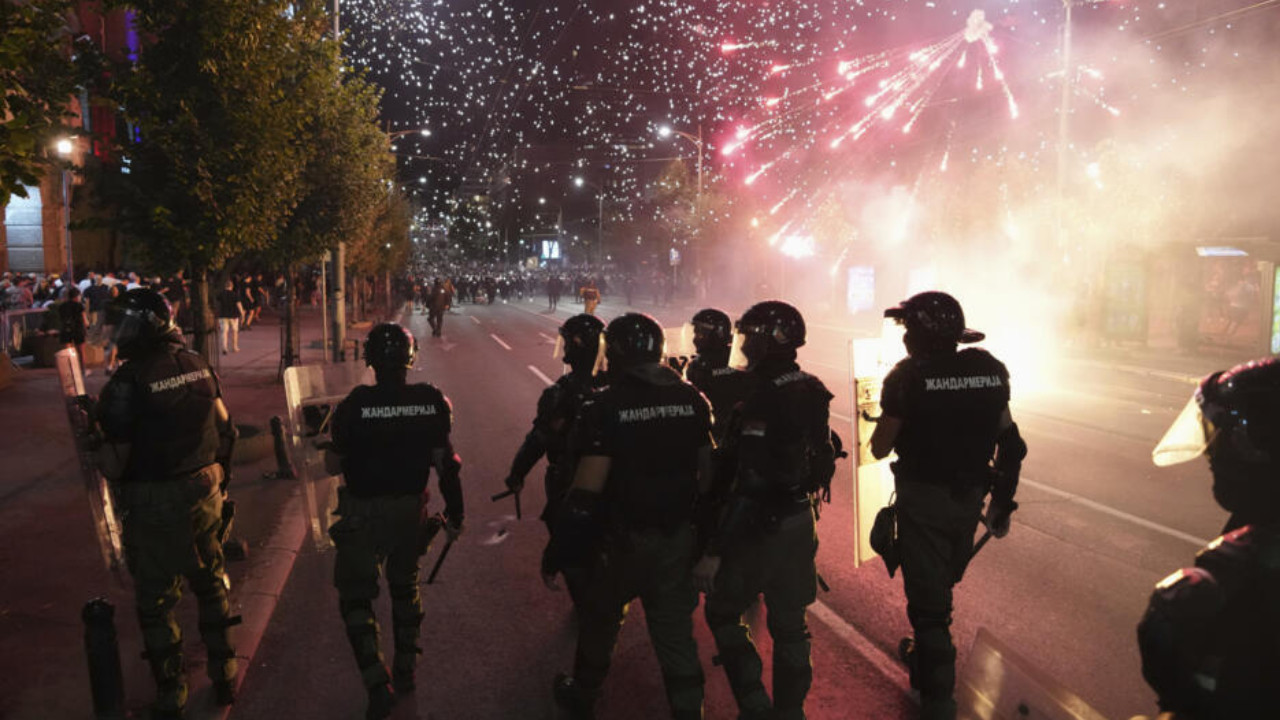
Serbia: A big change has been seen in the politics of Serbia. There is an atmosphere of celebration in the capital Belgrade after the historic victory of the student-backed ‘Student List’ in the parliamentary elections. Aleksandar Vučić’s party, which has maintained influence in power for a long time, has faced defeat in the elections. Vucic has also accepted defeat. After this, the withdrawal of police and anti-riot forces from the central areas of Belgrade began. A large number of people were seen celebrating the victory on the streets. This election is being seen as a major change in Serbia’s politics.
🚨 WATCH: SERBIAN POLICE WITHDRAW FROM CENTRAL BELGRADE! Police are seen pulling back from central Belgrade amid reports that President Aleksandar Vučić’s ruling party has lost power to the student-backed Student List. The footage captures a dramatic moment in Serbia’s political unrest. The real test now is whether the political transition will be peaceful and whether the will of Serbian voters will be respected.
— AnatolijUkraine (@AnatoliUkraine) October 26, 2026
Why were the police removed from Belgrade after Vucic’s defeat?
Police, gendarmerie and anti-riot forces were deployed in major government buildings and sensitive areas of Belgrade ahead of the election. Security arrangements were also kept tight around Rashtrapati Bhavan and Republic Electoral Commission.
But the situation started changing after the lead of Student List became clear in the election results and Vucic accepted defeat. According to local reports, some police contingents began withdrawing from central parts of the city. During this time, people were seen taking to the streets and celebrating at many places. However, the full reason for this will become clear only when the details of any comprehensive security order regarding the withdrawal of police are revealed.
How many votes did the student list get in the elections?
According to preliminary results from the Republic of Serbia Electoral Commission, the Student List received 52.71 percent of the votes, while the coalition led by Vučić received 39.17 percent. According to these preliminary figures, the Student List was projected to get 140 seats out of 250 seats in parliament, while Vučić’s coalition was projected to get 104 seats.
Nearly 69 percent voting also made this election important. Vucic conceded defeat shortly after voting ended, admitting that the Student List had won.
How did the two-year-old student movement change Serbia’s politics?
The roots of this political change are linked to the accident that took place at Navi Saad railway station in November 2024. 16 people died when the station canopy fell. After this incident, students started demonstrations regarding corruption, government accountability and administrative system.
Gradually this movement spread to many parts of the country. The protesters raised demands for transparency and accountability in government institutions. After prolonged protests, the student-backed group entered electoral politics and identified itself as the Student List. The electoral success of this movement has challenged Serbia’s traditional political equations.
Why did thousands of people take to the streets after the victory?
Supporters celebrated in several cities, including Belgrade, after the election results. People gathered on the streets, horns of vehicles were blown and victory rallies were taken out at many places. People associated with the movement saw the victory of the student list as a hope for change.
However, there were reports of tension and clashes at some places during the celebrations. According to reports, some protesters arrived outside the office of a media outlet considered pro-Vucic. After this, people associated with the student movement appealed to the supporters to maintain peace.
What challenges will the Student List face after winning the elections?
After winning the elections, now the student list faces the challenge of forming the government and running the administration. Issues like action against corruption, independence of judicial institutions, improvement in the education system and transparency in government functioning will be important for him.
Additionally, relations with the European Union, Serbia’s relations with Russia and China, and the country’s economic policies will also be important for the new political order. The movement has achieved great success in the elections, but it will have to translate its demands into policies and administrative decisions.