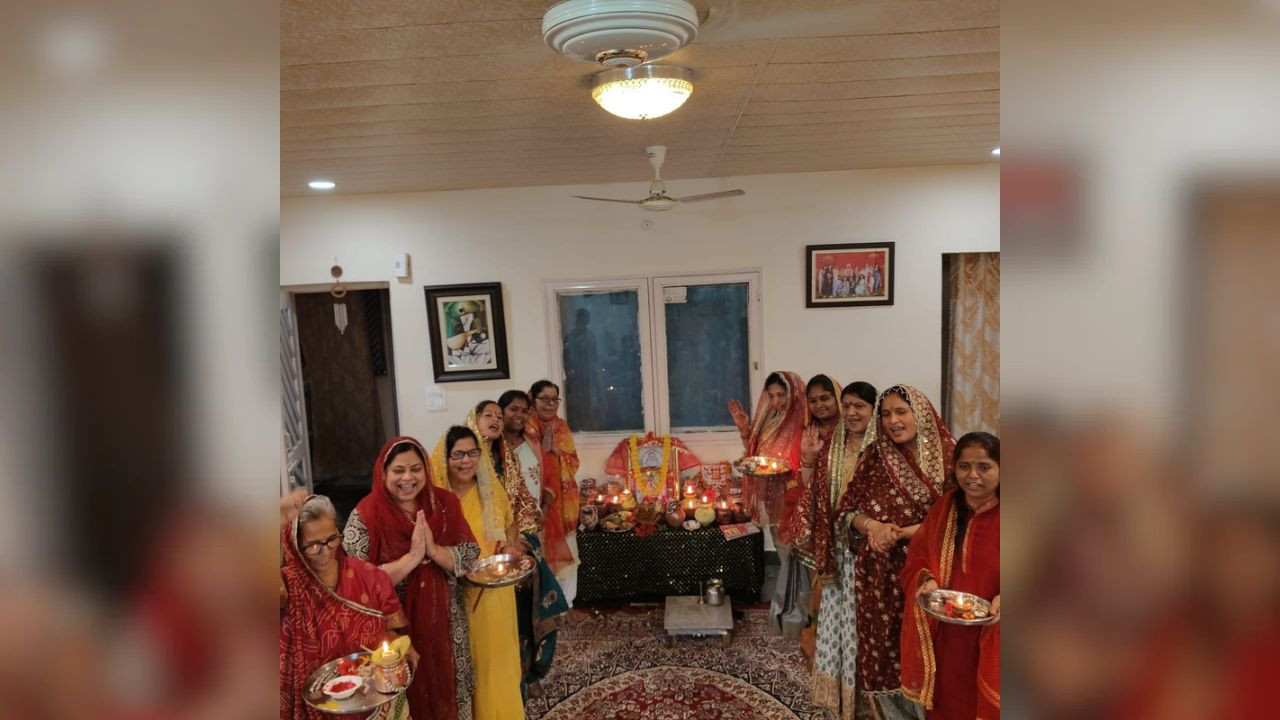
Vrindavan: The bond between a mother and child is not defined by blood alone. Love, care and selfless commitment can create equally strong family ties. This spirit is reflected at Vatsalya Gram in Vrindavan, where orphaned and abandoned children have found not just shelter but a loving family. On Sunday, the women who care for them observed a day-long nirjala fast on Ahoi Ashtami, praying for the children’s long life, good health and prosperity.
A Family Built on Love and Care
Under the Gokulam family system at Vatsalya Gram, 148 children are being raised across 16 families. Each family has women assigned the roles of mother, grandmother and maternal aunt. Together, they look after the children’s upbringing, education, values and everyday needs.
The arrangement was established by the institution’s founder, Sadhvi Ritambhara, to provide a family environment to children who could not grow up with their biological parents. Over the years, the women caring for them have developed deep emotional bonds, making the children an integral part of their lives.
How Have the Mothers Made the Tradition Their Own?
Sumanlata Parmanand, who heads one of the Vatsalya families, has been associated with the institution for around 20 years. She looks after seven children — four boys and three girls. Her eldest son, Shashwat, is 26 and is now employed. She says the years spent together have made the children an inseparable part of her life. Every year, she observes the Ahoi Ashtami fast for their long life and well-being.
Sadhika Parmanand, who joined Vatsalya Gram in 2004, also credits Sadhvi Ritambhara’s guidance and blessings for her journey. She says the children in her family have grown up and now support one another. She observes the fast with traditional rituals, praying for their happiness and prosperity.
Another account of the family bond comes from a mother who has spent nearly two decades at the institution. Her family comprises ten children — three boys and seven girls. Her eldest daughter, Simran, is pursuing a Bachelor of Arts degree, while her eldest son is studying fashion designing. For her, Ahoi Ashtami is more than a religious observance; it is an expression of affection and dedication towards the children.
A Shared Prayer and a Distinctive Tradition
The women observe the fast without food or water throughout the day. In the evening, they offer prayers to the Dhruv star before breaking their fast. They also take part in a collective worship ceremony in the presence of Sadhvi Ritambhara and seek her blessings.
A distinctive custom at Vatsalya Gram involves silver necklaces worn by the mothers. The number of beads on each necklace is twice the number of children in that mother’s care. The women wear these necklaces on the day of the fast and continue wearing them until Diwali.
Vatsalya Gram spokesperson Dr Umashankar Rahi said the mothers begin their nirjala fast in the morning and conclude it after offering prayers to the Dhruv star and participating in the collective ceremony. Sadhvi Ritambhara also presents gifts to the women on the occasion.
At Vatsalya Gram, Ahoi Ashtami is therefore not merely a festival but a celebration of the bonds created through motherhood, affection and a shared sense of belonging.