
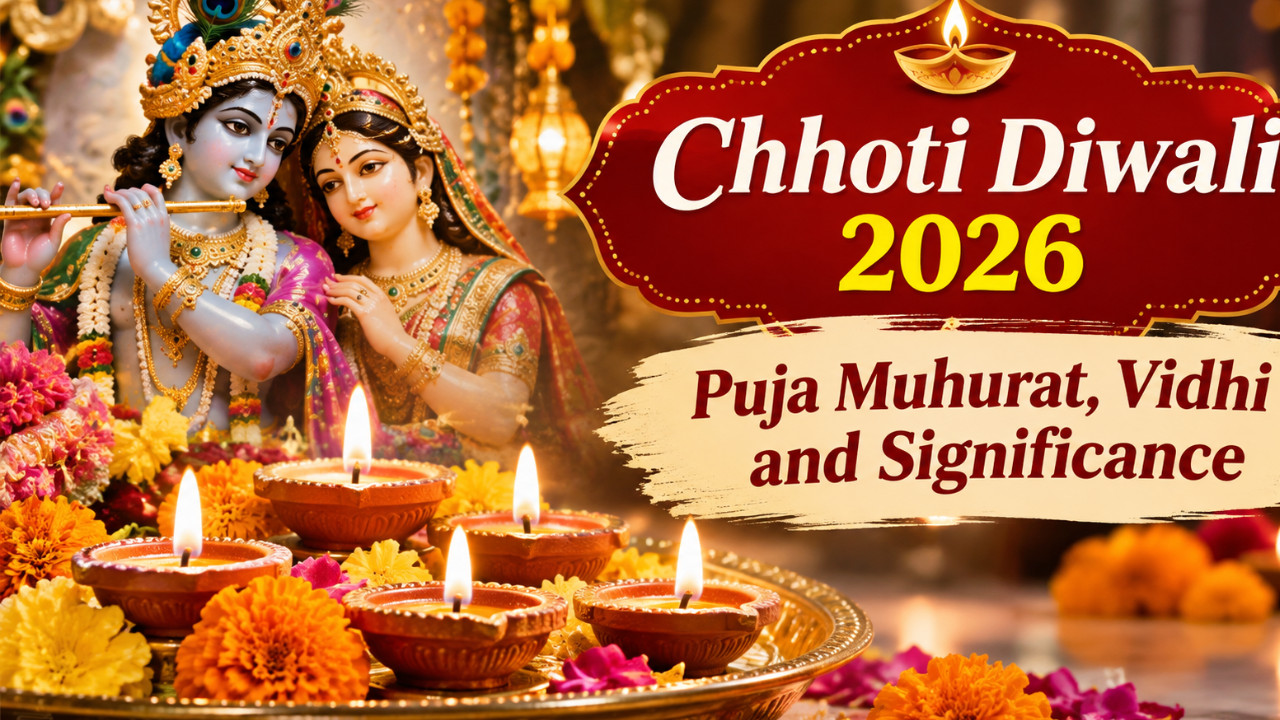
New Delhi: The festival of Diwali is celebrated for five days and Chhoti Diwali has special significance in this festival. It is also known as Narak Chaturdashi, Narak Chaudas, Roop Chaudas and Kali Chaudas. According to the Hindu calendar, this year Chhoti Diwali is being celebrated on 7 November 2026, Saturday. There is a tradition of worshipping Lord Krishna and Yamraj on this day. According to religious beliefs, donating a lamp on Chhoti Diwali and performing puja as per rituals brings happiness and prosperity to the house and removes negative energy.
Abhyanga bath and Yama lamp donation are considered to have special significance on Chhoti Diwali. In such a situation, let us know the auspicious time of this festival, the worship method and the mythological story related to it.
When is Chhoti Diwali 2026 being celebrated?
According to the Hindu calendar, Chhoti Diwali is celebrated on the Chaturdashi date of Krishna Paksha of Kartik month. This year, Chaturdashi Tithi is starting on November 7 at 10:47 am, while it will end on November 8 at 11:47 am. According to the tradition of Udaya Tithi and festival, Chhoti Diwali is being celebrated on 7th November.
Auspicious time of Chhoti Diwali 2026
On Chhoti Diwali, taking Abhyanga bath in the morning and donating a lamp in the name of Yamraj in the evening is considered auspicious. The main auspicious times of this day are as follows:
- Chhoti Diwali: 7 November 2026, Saturday
- Chaturdashi date start: 10:47 am
- Chaturdashi date ends: November 8, 11:47 am
- Abhyanga Snan Muhurta: 5:41 am to 6:38 am
- Moonrise time: 5:41 pm
- Yam Deepdan Muhurat: 5:31 pm to 5:57 pm
- Evening time: 5:31 to 6:50 pm
How to do puja on Chhoti Diwali?
There is a tradition of waking up early in the morning and taking bath on the day of Chhoti Diwali. According to religious beliefs, one should massage the body with sesame oil before sunrise and then take bath. This is called Abhyanga bath. It is believed that doing this brings health, beauty and good fortune.
After bathing, wear clean clothes and clean the place of worship. Light a lamp in front of the idol or picture of Lord Krishna. Offer them flowers, sandalwood, incense and sweets. After this, remember Lord Krishna and listen to the story of killing Narakasura.
In the evening, light a lamp at the main entrance of the house, courtyard and place of worship. There is a tradition of lighting a lamp in the name of Yamraj while facing south. This is called Yama Deepdaan. Donating food and clothes to the needy on this day is also considered auspicious.
Why did Lord Krishna kill Narakasura?
According to legend, in ancient times there was a powerful demon named Narakasura. He had created terror in all three worlds with his atrocities. He troubled the gods, sages and common people. Narakasura had also taken captive more than 16 thousand girls.
Troubled by his atrocities, everyone sought help from Lord Krishna. It is believed that Narakasura was blessed that he could be killed only by the hands of his mother. His mother was Bhumidevi and Lord Krishna’s wife Satyabhama is considered to be the incarnation of Bhumidevi.
After this, Lord Shri Krishna along with Satyabhama came to fight with Narakasura. During the war, Shri Krishna pretended to faint. Seeing this, Satyabhama became angry and shot an arrow at Narakasura. In this way Narakasura ended and people got freedom from his atrocities.
Why is the lamp in the name of Yamraj lit on Chhoti Diwali?
There is a special tradition of donating lamps in the name of Yamraj on Chhoti Diwali. According to religious belief, lighting a lamp in the south direction outside the house on this day removes the fear of untimely death. This is called Yama Deepdaan.
It is believed that by lighting a lamp in the name of Yamraj and worshipping him, family members are blessed with long life and good health. This festival of Chhoti Diwali also gives the message of victory of good over evil and light over darkness.