
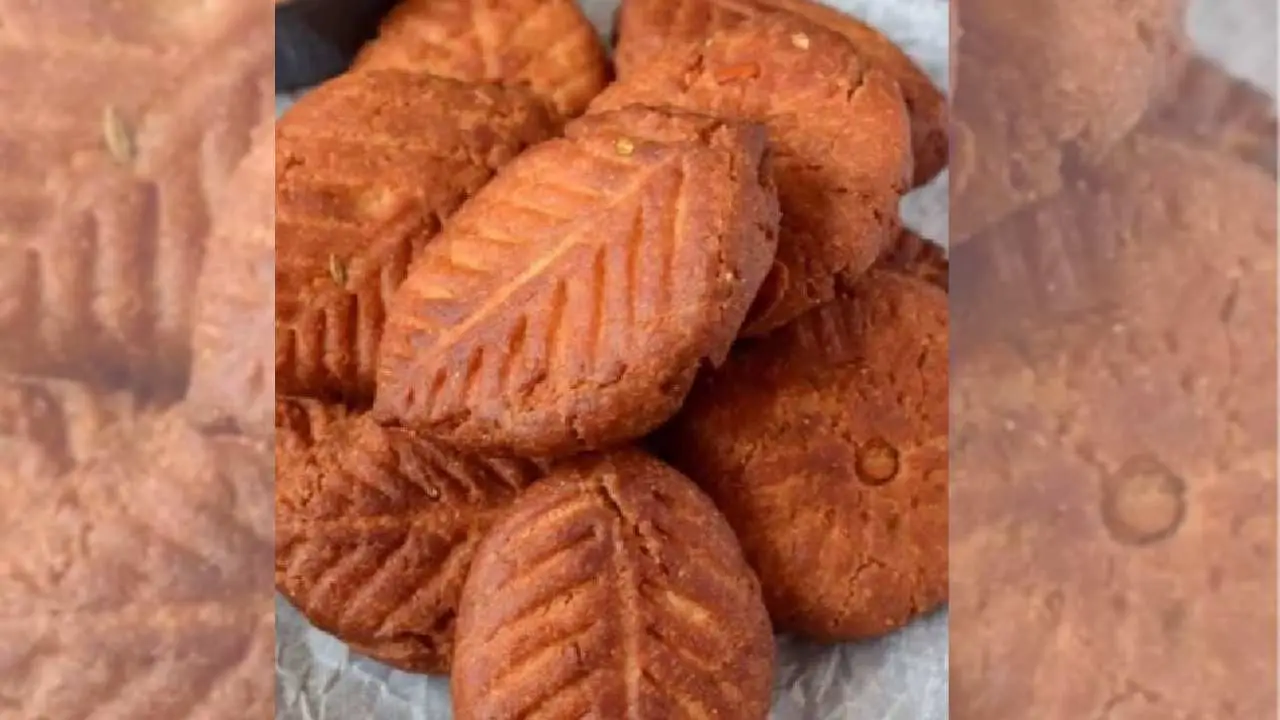
New Delhi: Whenever Chhath Puja is mentioned, thekua is one of the first traditional offerings that comes to mind. Prepared using wheat flour, jaggery or sugar, and ghee, this delicacy is not only known for its distinctive taste but also has an interesting nutritional profile.
Many people believe that eating thekua provides instant energy and helps relieve weakness, especially after long hours of fasting. But is this really true?
Thekua contains carbohydrates and fats, which provide calories to the body. Carbohydrates are the body’s primary source of energy, while fats are a more concentrated source of energy. However, the amount of energy it provides depends on the recipe, size and ingredients used.
Let us understand how thekua benefits the body and whether it is a useful food option for those observing a fast.
How Do Carbohydrates in Thekua Provide Energy to the Body?
Wheat flour, which is rich in carbohydrates, is one of the main ingredients used to prepare thekua. When we eat it, the starch present in the flour breaks down into glucose during digestion. This glucose enters the bloodstream and reaches the body’s cells, where it is used to produce energy.
According to the National Center for Biotechnology Information (NCBI), the body needs energy to perform everyday activities, including walking, moving, thinking and keeping muscles active. Carbohydrates play an important role in meeting these energy requirements.
The body can also store excess glucose in the form of glycogen in the liver and muscles, where it can be used whenever required.
However, the energy provided by eating thekua should not necessarily be considered long-lasting. Since jaggery or sugar is also added during its preparation, the total sugar and carbohydrate content can be relatively high.
What Nutrients Do Jaggery and Wheat Flour Provide?
Both major ingredients used in thekua—wheat flour and jaggery—provide certain nutrients.
Apart from carbohydrates, wheat flour can provide protein, small amounts of fibre and B vitamins. According to the Harvard T.H. Chan School of Public Health, if thekua is prepared using whole-wheat flour or other whole grains such as ragi or bajra, it may contain more fibre than the version made with refined flour.
According to the NCBI, jaggery mainly contains sugar. It may also contain small amounts of minerals such as iron, potassium and calcium. However, the quantities of these minerals are not high enough for jaggery to be considered a major source of essential nutrients.
How Do the Calories from Ghee in Thekua Benefit the Body?
According to the NCBI, ghee is used to make thekua flavourful and crispy. Ghee is a source of fat, and fat provides approximately 9 calories per gram, compared with around 4 calories per gram from carbohydrates and protein.
As a result, the calorie content of thekua can increase when it is prepared with ghee. This makes it an energy-dense food, although its nutritional value depends on the quantity of ghee and other ingredients used.