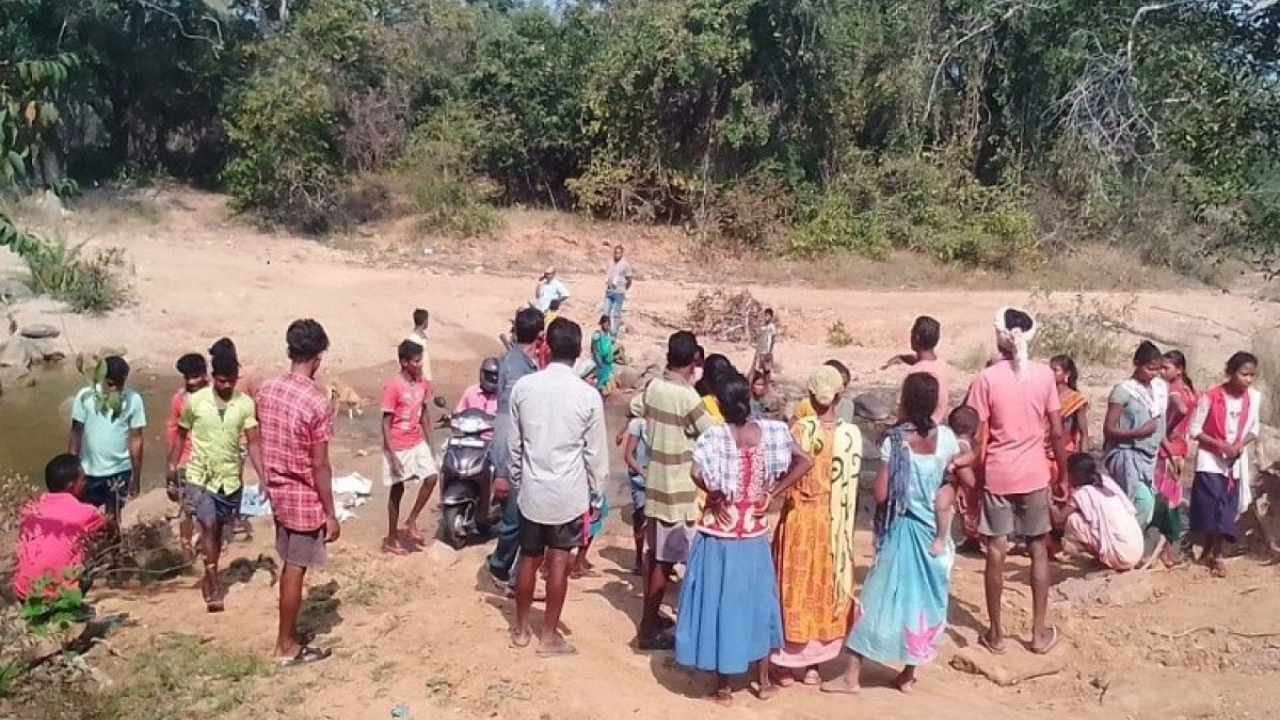
The National Commission for Scheduled Tribes (NCST) has asked the Chhattisgarh government to make a “full plan to bring back” tribal families forced to leave the state because of Maoist violence and now living in hard conditions in nearby states. In a meeting held on September 8, members of Valasa Adhivasula Samaikya, a group working for the return of displaced people, told the NCST that their survey in 283 unrecognised villages of Andhra Pradesh and Telangana found 9,651 displaced families living there.
But the Scheduled Castes Development Department of Chhattisgarh told the NCST in July that its teams had found only 3,335 families who had moved to Telangana and Andhra Pradesh from Dantewada, Sukma and Bijapur districts. No displaced families were found in Odisha or Maharashtra, the state informed the Commission.
Differences in survey numbers
Telangana and Andhra Pradesh earlier told the NCST that their surveys had counted about 23,500 and 8,500 Gottikoya people living in their states. At the September 8 meeting, the NCST asked Valasa to share its data with Chhattisgarh and told the state government to “verify again” the figures. The Commission also told Chhattisgarh to prepare a “clear plan” for bringing back displaced tribal families affected by fighting between Maoists and security forces. “Without such a plan, no one will want to return,” the NCST noted.
Recommendations for rehabilitation
The Commission said the plan should include land for farming and housing, jobs, health and other development needs. It stressed that each displaced family should get at least five acres of land, livelihood support, PMAY houses, community certificates and ration. It also asked that basic services like schools, health centres, anganwadis, electricity and drinking water be provided in their new homes.
It further said the issue should be reported to the Ministry of Tribal Affairs and the Ministry of Home Affairs for policy action. The NCST had received Valasa’s petition in March 2022, saying that Gottikoya families left Chhattisgarh in 2005 to escape Maoist violence and have faced serious problems in Telangana and Andhra Pradesh. Reports say the Telangana government has taken back land from displaced families in at least 75 settlements, hurting their livelihoods. There are also claims that forest officials demolished houses and crops of displaced people. Telangana earlier told the NCST that the Gottikoyas were using forest land, harming the environment and creating risks of natural disasters. The state also said that because the Gottikoyas came from Chhattisgarh, they are not listed as Scheduled Tribes in Telangana and so cannot get forest rights.
Call for land titles and special plan
In its new directions, the NCST asked authorities to see if displaced people in Telangana, Andhra Pradesh and other states can be given land titles under Section 3 of the Forest Rights Act. Social activist Shubhranshu Chaudhary said the displaced should be seen as victims of a conflict that is close to ending. “We fear that when the conflict ends, these victims will be forgotten,” he said. He noted that the Union Home Ministry had rehabilitated Bru tribals from Mizoram in Tripura in 2019–20 and added that these Gond tribals could be helped in the same way with a special plan. Chaudhary also said the Centre could use Section 3 of the FRA to regularise forest land occupied by displaced families in Telangana and Andhra Pradesh in exchange for vacated forest land in Chhattisgarh. “Owning land can give them citizenship rights, and then recognition as tribals can follow,” he said.