New Delhi: The All India Institute of Medical Sciences (AIIMS), New Delhi, organised a four-day international workshop on advanced treatments for movement disorders from November 25 to 28, 2026. The workshop featured a live demonstration of Deep Brain Stimulation (DBS) surgery with robotic assistance, scientific lectures, discussions on complex patient cases and hands-on training.
The event brought together medical technology and specialist expertise, demonstrating how robotic precision can support doctors in performing complex brain surgeries. More than 180 experts and participants registered for the workshop.
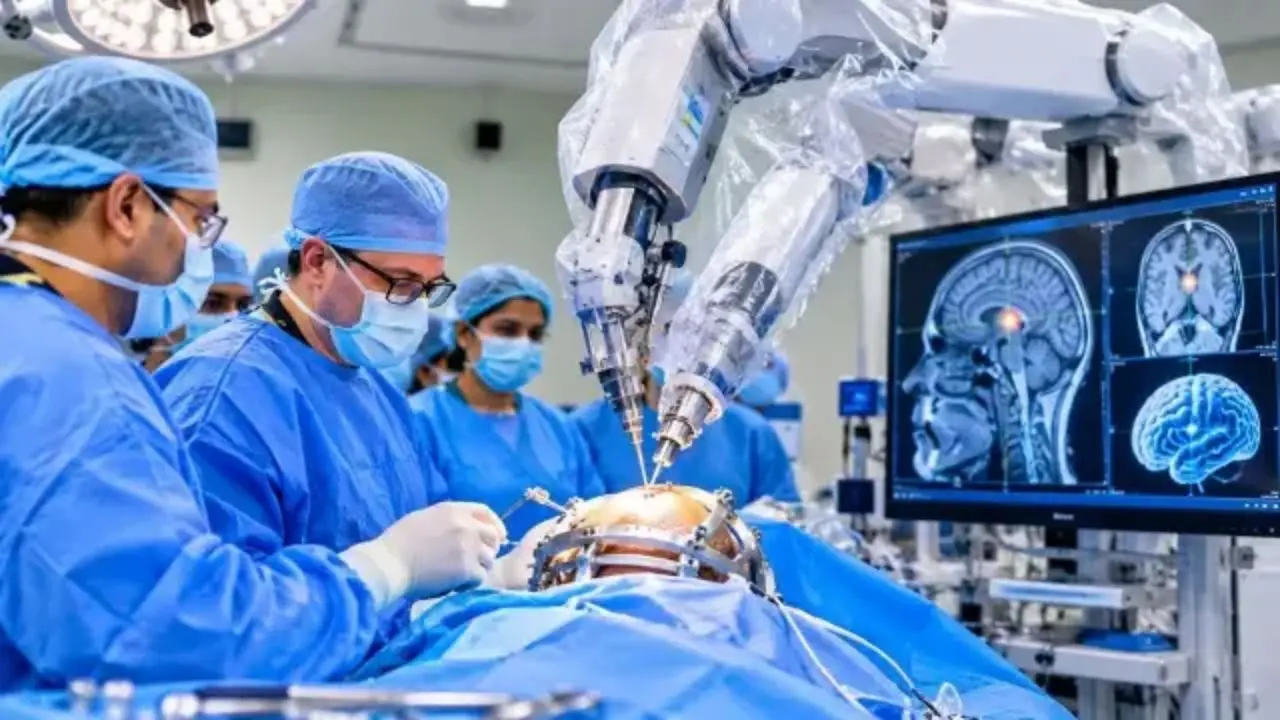
Live Demonstration of Robot-Assisted DBS Surgery
The workshop was jointly organised by the Departments of Neurology and Neurosurgery at AIIMS to mark World Movement Disorders Day.
On November 25, the first day of the event, a live demonstration of robot-assisted Deep Brain Stimulation surgery was conducted. Professor Sharath Chandra, Head of the Department of Neurosurgery, and Professor Ido Strauss from Israel jointly performed the procedure.
The surgery was attended by a team of specialists, including Professor Dattaraj Sawarkar, Professor Ramesh Dodamani and Professor Satish Verma.
Technology Helps Identify Precise Targets in the Brain
During the procedure, doctors used Microelectrode Recording (MER) to study the activity of nerve cells in deeper regions of the brain.
Dr Jenella Morris from Tel Aviv University explained the use of this technique along with artificial intelligence-based analysis. This approach helps specialists identify the appropriate target area during surgery and supports greater precision in treatment.
International Experts Share Experience on Parkinson’s and Dystonia
Scientific sessions held from November 26 to 28 featured lectures by Professor Jens Volkmann from Germany and Professor Renato Munhoz from Canada.
They discussed the role of Deep Brain Stimulation in treating Parkinson’s disease and dystonia. Their sessions covered several important aspects, including patient selection, electrode placement, programming and long-term treatment outcomes.
An international team of experts also carried out the first programming session for a patient who had received DBS electrodes three weeks earlier.
More Than 100 Participants Receive Practical Training
The workshop recorded more than 180 registrations. In addition, over 100 participants took part in the Botulinum Toxin training programme.
Through discussions and practical sessions involving 40 patient cases, participants received hands-on training in injection techniques. The sessions were aimed at improving clinical skills and familiarising specialists with the practical aspects of treating movement disorders.
Workshop Inaugurated by AIIMS Neurology Department Head
The programme was inaugurated by Professor Manjari Tripathi, Head of the Department of Neurology at AIIMS.
Experts and teams from both the Neurology and Neurosurgery departments played an important role in organising the four-day workshop and conducting its scientific and practical sessions.
The event provided a platform for specialists from India and abroad to exchange knowledge and discuss advances in the treatment of complex movement disorders.