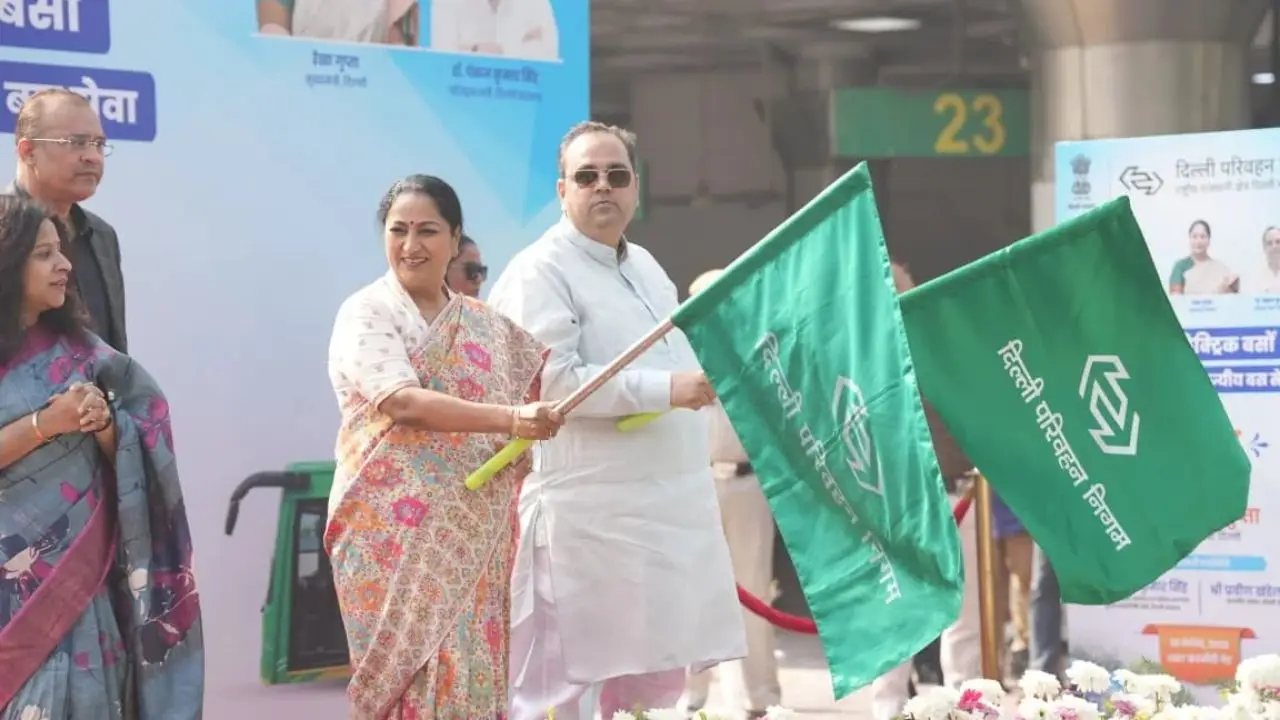
New Delhi: Development in public transport is set to gain momentum in Delhi, with the expansion of bus services beyond the national capital’s boundaries. Strengthening efforts to tackle pollution and traffic congestion, Chief Minister Rekha Gupta on Friday flagged off 100 new electric buses. An interstate electric bus service between Anand Vihar Interstate Bus Terminal and Hapur in Uttar Pradesh was also launched. The initiative is expected to benefit thousands of daily commuters across the Delhi-NCR region.
The Chief Minister said Delhi’s transport network would no longer remain restricted to the capital’s boundaries. Connecting neighbouring cities such as Ghaziabad, Pilkhuwa and Hapur through improved bus connectivity is a government priority. The service will provide people travelling to Delhi for work, business and education with an alternative to private vehicles. It is also expected to help reduce traffic congestion and pollution.
What Is the Composition of Delhi’s 7,088-Bus Fleet?
The 100 newly inducted buses include 50 nine-metre-long and 50 twelve-metre-long vehicles. All are air-conditioned, low-floor buses equipped with zero-emission technology.
The buses feature CCTV cameras, emergency buttons, real-time monitoring systems and facilities for passengers with disabilities. With their addition, Delhi’s total bus fleet has increased to 7,088 vehicles, comprising 5,338 electric buses and 1,750 CNG buses.
How Frequently Will Buses Operate Between Anand Vihar and Hapur?
A total of 12 electric buses will operate between Anand Vihar and Hapur in both directions, with services available every 20 minutes. The route will include stops at major locations such as Ghaziabad, Mohan Nagar, Hapur Chungi, Dasna, Masuri and Pilkhuwa.
The fare for the journey has been fixed at Rs 124.
Transport Minister Dr Pankaj Kumar Singh said the government aims to expand Delhi’s bus fleet to approximately 14,000 vehicles by 2028-29. Interstate electric bus services to Panipat and Karnal have also been launched.
The government aims to make road travel smoother and more comfortable while strengthening efforts to reduce pollution.