New Delhi: The Delhi Police is stepping up its efforts to improve women’s safety across the national capital through expanded CCTV surveillance, increased patrolling, dedicated women-led response teams and faster emergency assistance. Nearly 6,000 CCTV cameras have been installed in public parks, while the force aims to increase women’s representation from the current 17.3 per cent to 25 per cent by 2030.
The developments are part of a three-month special action plan prepared following review meetings chaired by Union Home Minister Amit Shah. During a meeting with senior police officials at Delhi Police Headquarters on October 24, Shah directed the force to strengthen women’s safety, improve assistance to victims and ensure effective prosecution of criminal cases.
Security Measures Extended to 19,822 Vulnerable Locations
The Delhi Police has identified 19,822 vulnerable locations across the capital where inadequate lighting or other security shortcomings have been reported. Efforts are underway to bring these areas under CCTV surveillance.
Meanwhile, security audits of 1,635 public parks have been completed. The police is focusing on improving lighting arrangements, strengthening boundary walls and installing fencing to make these spaces safer. The work of providing boundary walls and fencing across all parks is targeted for completion by January 26, 2027.
Security arrangements have also been strengthened in 503 major parks through designated entry and exit points and regular police patrolling. Additional deployment of PCR vehicles outside parks is another priority to ensure a quicker response during emergencies.
Pink Scooters and All-Women PCR Vans Strengthen Patrolling
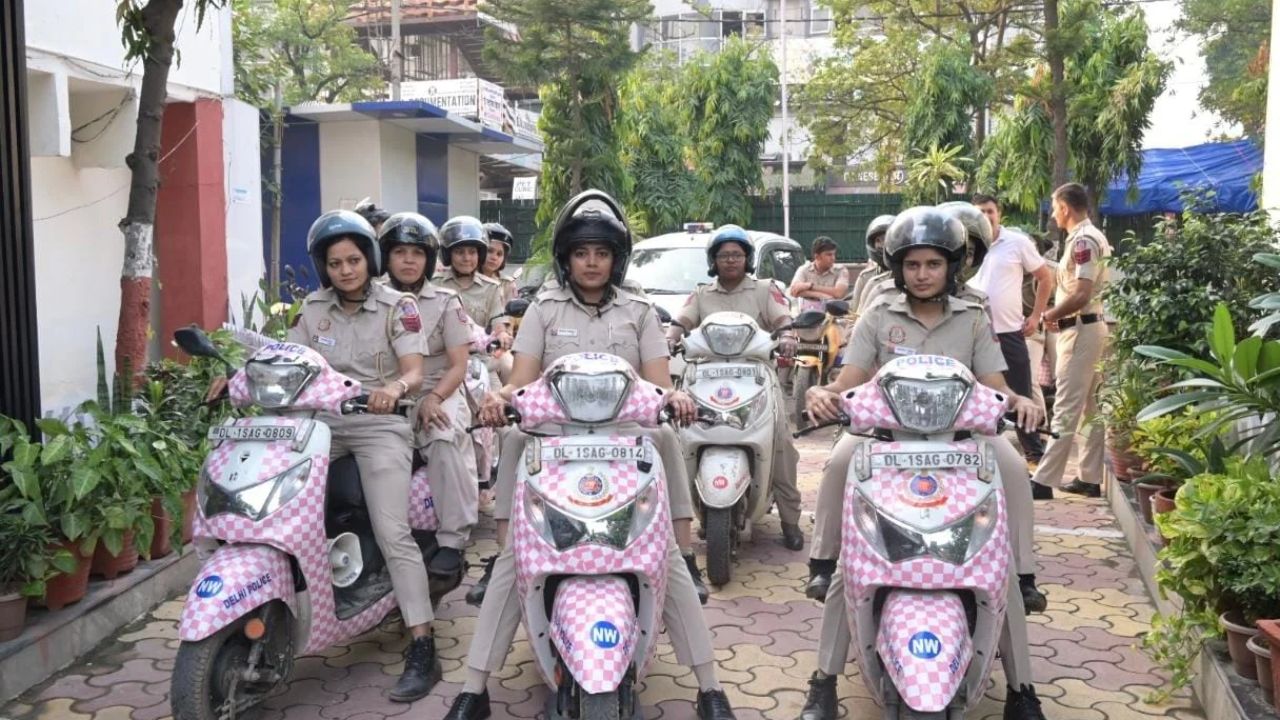
To improve women’s safety on the streets, 178 pink scooters operated by Delhi Police personnel are actively conducting patrols. Each scooter is reportedly deployed for an average of 7.4 hours daily.
In addition, 35 all-women PCR vans have been introduced to respond to complaints involving women and provide assistance during emergencies.
The police have also improved their response time through the emergency helpline 112. The average response time has declined from 11 minutes and 53 seconds to 8 minutes and 2 seconds, enabling police teams to reach people more quickly during emergencies.
How Are Women Receiving Direct Police Assistance?
Women can approach 125 operational pink booths across Delhi to register complaints and seek police assistance. These facilities receive an average of 308 women daily.
Women help desks are also functioning round the clock at airport, railway and metro police stations. To address serious offences such as human trafficking, anti-human trafficking units have been activated in every district.
Over 1.24 Lakh People Face Action Under Special Drive
The Delhi Police’s ongoing Shishtachar Abhiyan aims to curb harassment, inappropriate behaviour and anti-social activities in public spaces.
Under the campaign, 17,387 drives have been conducted, resulting in action against 1,24,010 individuals.
The police have simultaneously expanded awareness programmes across schools, colleges, girls’ hostels and working women’s hostels. A total of 22,662 awareness sessions have reached approximately 15.9 lakh citizens.
Around 5.7 lakh people have received self-defence training, while another 3.4 lakh individuals have been covered under child safety programmes.
37 New Special Courts Planned for Faster Justice
To speed up trials involving crimes against women and children, Delhi already has 25 special courts. Another 37 special courts are being established to strengthen the judicial process.
Between January and October 31, 2026, a total of 1,225 rape and POCSO cases were registered. Chargesheets have been filed in 81 per cent of these cases, while compliance with the prescribed two-month deadline for filing chargesheets stood at 94 per cent.
Women’s Representation in Police Force to Reach 25% by 2030
Women currently account for 17.3 per cent of the Delhi Police workforce. The department aims to raise this figure to 25 per cent by 2030.
The proposed expansion is expected to increase women’s participation in policing, improve the handling of complaints involving women and make the overall security system more responsive.
Self-Defence Demonstration at Bharat Mandapam
Delhi Police also highlighted its efforts to promote women’s safety and self-confidence through an interactive demonstration at Bharat Mandapam.
Police Commissioner Anurag Kumar visited the Delhi Police stalls and reviewed the initiatives showcased there. School students and women police personnel presented practical self-defence demonstrations on stage.
The session highlighted safety measures that women and girls can adopt while travelling on buses, walking on roads or navigating potentially unsafe public spaces. The demonstration aimed to encourage awareness, confidence and presence of mind when dealing with challenging situations.
The three-month action plan brings together technology, increased patrolling, women-led police teams, public awareness, self-defence training and faster legal proceedings. From CCTV surveillance in parks to dedicated emergency response vehicles and additional special courts, Delhi Police is seeking to establish a wider and more responsive safety network across the capital.