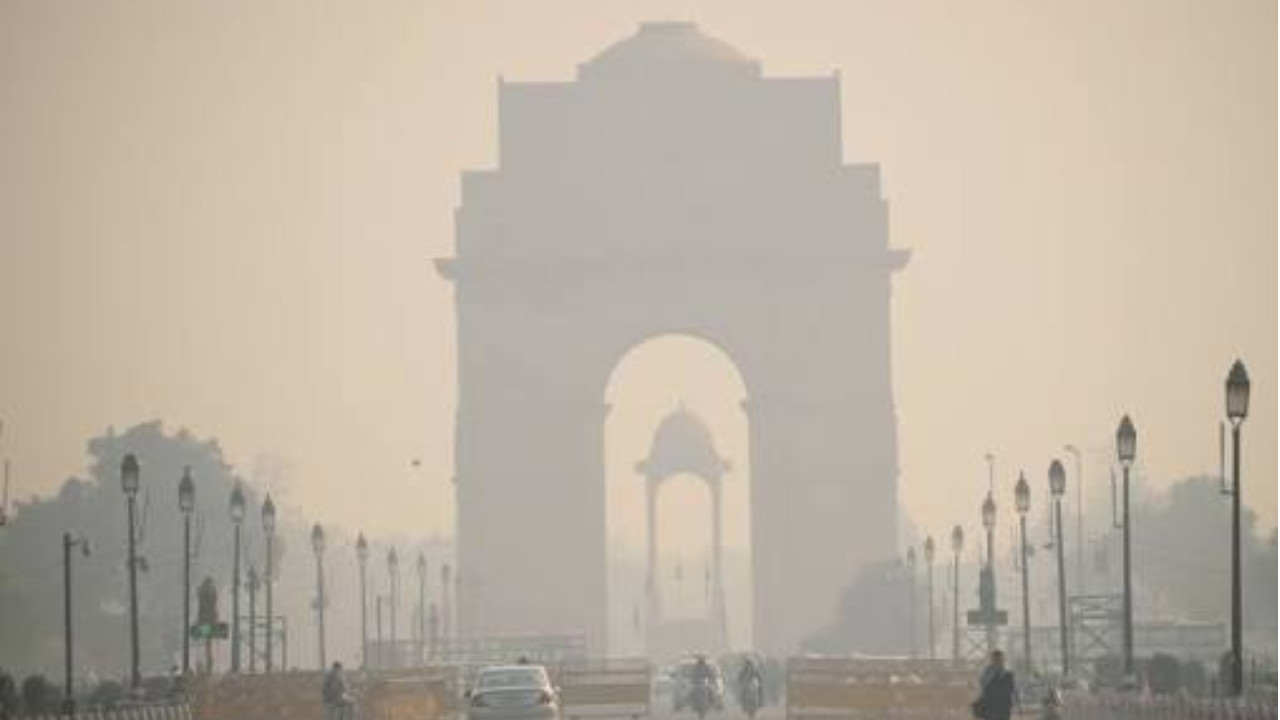
New Delhi: The situation of air pollution in the country’s capital Delhi is becoming increasingly serious. The increasing level of pollution has increased the problems of the people. The air of the capital has become so poisonous that people are facing difficulty in breathing. Delhi’s Air Quality Index (AQI) has reached 567, which shows a very worrying situation. There has been no significant improvement in the air quality of the capital for the last several days.
Due to continuously increasing levels of pollution, problems of children, elderly and people suffering from respiratory diseases may increase. In such a situation, the people of Delhi do not seem to be getting any relief at present.
Which areas of Delhi have the most pollution?
The air quality situation remains very poor in different areas of the capital. AQI levels have been recorded quite high in some areas. According to the available data, AQI was recorded at 619 in Alipore, 361 in Bawana, 433 in Rohini and 425 in Sonia Vihar.
Apart from this, the pollution level in Mundka reached the highest level of 722. Whereas AQI was recorded at 490 in Punjabi Bagh, 479 in Jhilmil Industrial Area and 418 in Mandir Marg. It is clear from these figures that the air quality in many areas of the capital has reached a very poor condition.
Why are government steps not working to stop pollution?
Many measures are being taken by the government and administration to control the increasing pollution in Delhi. Despite this, the expected improvement in air quality is not happening. At present, the effect of the steps taken to control pollution is not visible on the ground.
Due to the continuously deteriorating air, people are facing difficulty in coming out of their houses. The effect of pollution can be felt more especially in the morning and evening.
Why was there no relief even after implementation of GRAP-2?
Earlier on Tuesday, Delhi’s AQI was recorded at 350, which was said to be the worst level in the last 267 days. Even at that time, it was feared that the pollution situation could become more serious in the coming days.
In view of the increasing pollution, the second phase of the Graded Response Action Plan (GRAP) i.e. GRAP-2 was implemented in the capital. However, despite this, there is no improvement in air quality. Now all eyes are on how much impact the change in weather will have on pollution levels in the coming days and when the people of Delhi will get relief from the poisonous air.