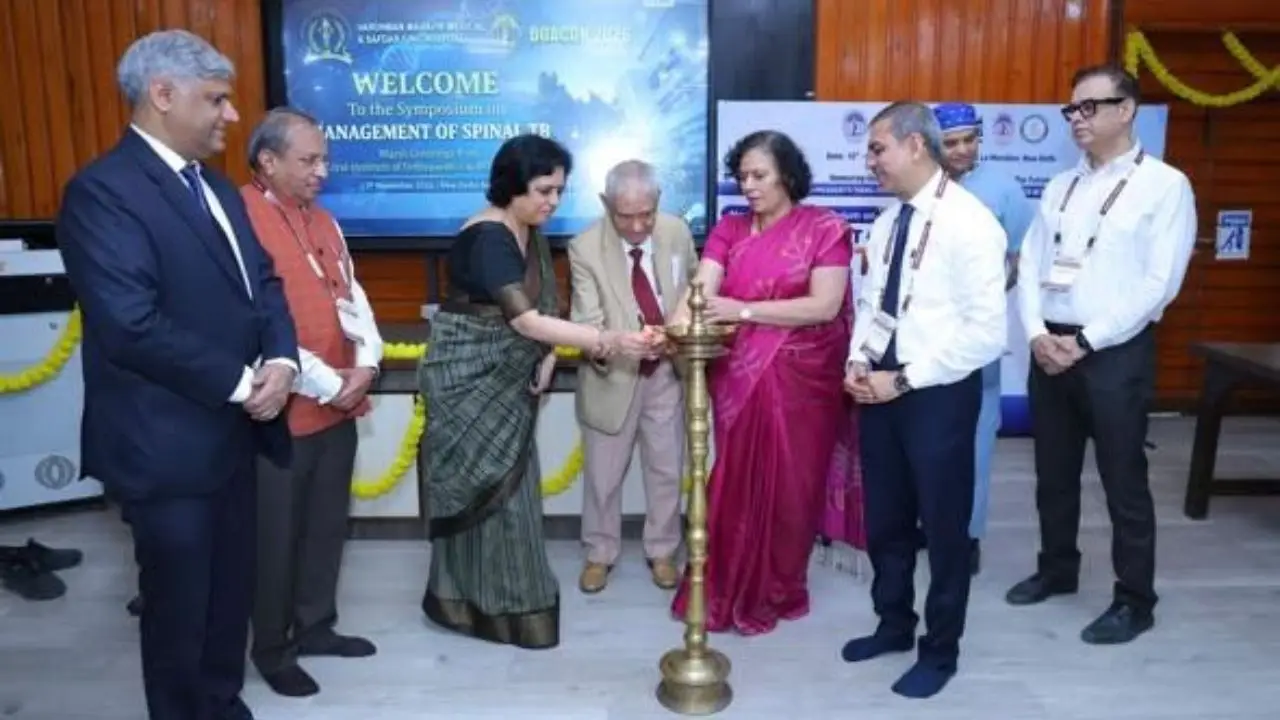
New Delhi: Leading medical experts from across the country gathered at Safdarjung Hospital on November 13, 2026, to discuss advances in the diagnosis and treatment of spinal tuberculosis (TB). The Central Institute of Orthopaedics (CIO), Vardhman Mahavir Medical College (VMMC), organised a specialised symposium on spinal TB management as part of a pre-conference workshop of the Delhi Orthopaedic Association.
The event brought together renowned orthopaedic surgeons, specialists and medical professionals from different departments to exchange knowledge on modern diagnostic techniques, treatment approaches and complex surgical procedures related to spinal tuberculosis.
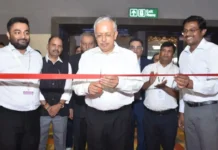
The symposium was inaugurated by Dr Kavita Rani Sharma, Director of VMMC and Safdarjung Hospital, along with Dr Geetika Khanna, Principal of the medical college, and Dr Charu Bamba, Medical Superintendent. Former Principal and former CIO Director Prof. V.K. Sharma was also present.
Around 125 registered delegates attended the programme, including postgraduate students, senior doctors and faculty members from various medical departments.
Multidisciplinary approach to spinal TB management
Organised under the leadership of Dr Sumit Sural, Director of CIO and Chairperson of the event, the academic programme featured experts from orthopaedics, radiology, pathology, microbiology, and physical medicine and rehabilitation.
The primary objective was to discuss the latest developments across the entire spectrum of spinal TB management, covering accurate diagnosis, non-surgical treatment and advanced surgical interventions.
A major highlight was the lecture delivered by renowned physician Prof. S.M. Tuli, who was present at the inauguration of CIO at Safdarjung Hospital in 1962. He was also the first PhD holder in the institution’s orthopaedics department. His widely recognised book on tuberculosis continues to serve as an important reference for medical students across the country.
Six-month treatment and drug resistance testing discussed
Prof. Anil Jain, Dr Matthew Varghese, Prof. Sumit Sural and Dr Ashwini Khanna shared insights into the Indian Index TB guidelines and various aspects of spinal tuberculosis treatment.
Research presented by Prof. Anil Dhal highlighted the potential role of ciprofloxacin-labelled technetium bone scans in assessing whether tuberculosis has been successfully treated.
Discussing the latest evidence-based findings from 2026, experts noted that a six-month course of anti-tuberculosis medication may be sufficient for patients showing a favourable response to treatment. However, patients who do not respond as expected may require repeat testing to identify possible drug resistance.
Experts discuss advanced surgical and diagnostic techniques
Dr T. Talukdar, Chairman of the Delhi State Task Force and Head of the Department of Pulmonary Medicine at Safdarjung Hospital, outlined the National Tuberculosis Elimination Programme and its key initiatives.
Complex spinal deformities and their surgical management were also discussed by Dr H.S. Chhabra, Dr Vikas Tandon, Dr Gururaj S., Dr Tarun Suri, Prof. Tankeshwar Borua and Prof. Atul Sareen.
Meanwhile, Prof. Dharmendra Kumar Singh and Dr Zeeshan Siddiqui shared their expertise on spinal biopsy procedures, molecular diagnostic methods and culture techniques.
Prof. Ajay Gupta discussed the use of supportive braces in patients suffering from spinal tuberculosis, highlighting their role in patient management.
The symposium provided an important platform for medical professionals to exchange research findings, discuss evolving treatment practices and strengthen multidisciplinary approaches towards improving spinal TB care.