




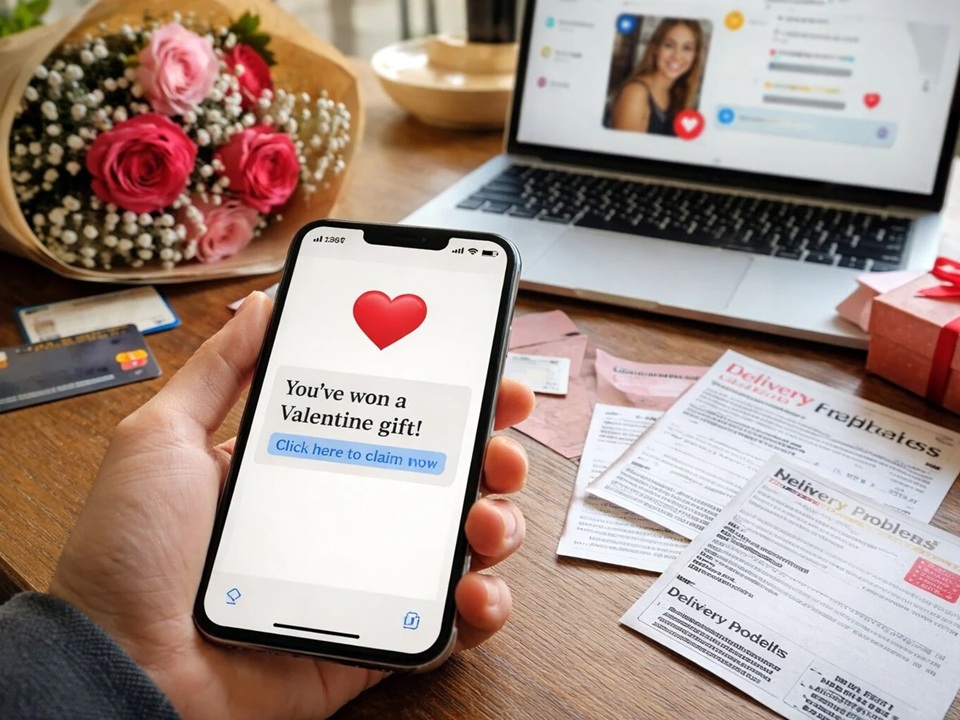
New Delhi: During Valentine’s Week, while on one hand people are busy preparing to express their love, on the other hand cyber thugs have become active. Cyber security agencies have warned that on this special occasion, online users are being targeted in the name of romance, gift delivery and phishing. Efforts are being made to steal people’s personal information and bank details through fake websites, fake delivery messages and tempting offers.
How does a romance delivery scam work?
Fraudsters call or message pretending to be gift delivery agents or representatives of some e-commerce platform. They claim that an expensive gift has been sent in your name but require a processing fee or OTP to receive it. As soon as the person shares the OTP or bank details, the amount is withdrawn from the account.
How is fraud done through phishing links?
Cybercriminals create fake websites and lure them with discounts or special Valentine offers. As soon as the user clicks on the link, he is asked for card details, UPI ID or login information. This information directly reaches the fraudsters, causing financial loss.
Why are romance frauds increasing on social media?
Around Valentine’s Day, activity on online platforms increases and fraudsters take advantage of this crowd. They create profiles with fake names and photos, slowly start conversations and try to build a relationship of trust. After a few days or weeks, they ask for money on the pretext of medical emergency, gift, custom clearance or travel expenses. Many people do not doubt due to emotional attachment and send the money, but later it is found out that the person in front was not real.
How to identify fake delivery messages?
Experts say that one should be cautious of messages coming from unknown numbers, suspicious links or misspelled websites. If any delivery notification is received, then confirm it by visiting the official website or app of the concerned company.
Is sharing OTP the biggest mistake?
Cybersecurity experts have been continuously warning that OTP, bank PIN or card CVV should not be shared with anyone. Most of the frauds are carried out through this information.
What precautions should be taken to stay safe?
Use only trusted websites while making online payments. Keep two-factor authentication active and don’t respond to suspicious calls or messages. If any kind of fraud occurs, immediately contact the bank and the cybercrime helpline.
Do cases of cyber fraud increase on Valentine’s Day?
Experts say that cases of fraud increase by taking advantage of emotions during festivals and special occasions. People take decisions in haste and forget caution in the lure of offers or surprises.
Valentine’s Day is a day of joy and celebration, but caution is necessary when it comes to online transactions and unknown contacts. A little vigilance can save you from big financial losses.