New Delhi: Global tensions stemming from the US-Iran conflict, coupled with the closure of the Strait of Hormuz—the most critical maritime route for meeting the world’s oil requirements—have had a significant impact globally. India, too, has felt the repercussions, witnessing issues ranging from an LPG crisis to fuel shortages within the country. However, the government took several major steps to mitigate these effects, and the “Modi Govt Plan-B” proved effective. These measures included boosting domestic production as well as diversifying import destinations.
Within just a few days of the crisis’s onset, domestic LPG production was ramped up from 36,000 tonnes per day to 54,000 tonnes per day. Furthermore, to provide relief to the public from rising global prices, the government significantly reduced excise duties on petrol and diesel. While an increase in LPG prices was indeed observed, despite the overall crisis, there was no corresponding hike in petrol and diesel prices in India.
Consequently, petroleum companies are incurring substantial losses. According to reports, despite the surge in global energy prices, oil companies are suffering daily losses of ₹1,600 to ₹1,700 crore due to the decision to keep domestic fuel prices unchanged.
Did Selling Fuel at Old Prices Prove Costly?
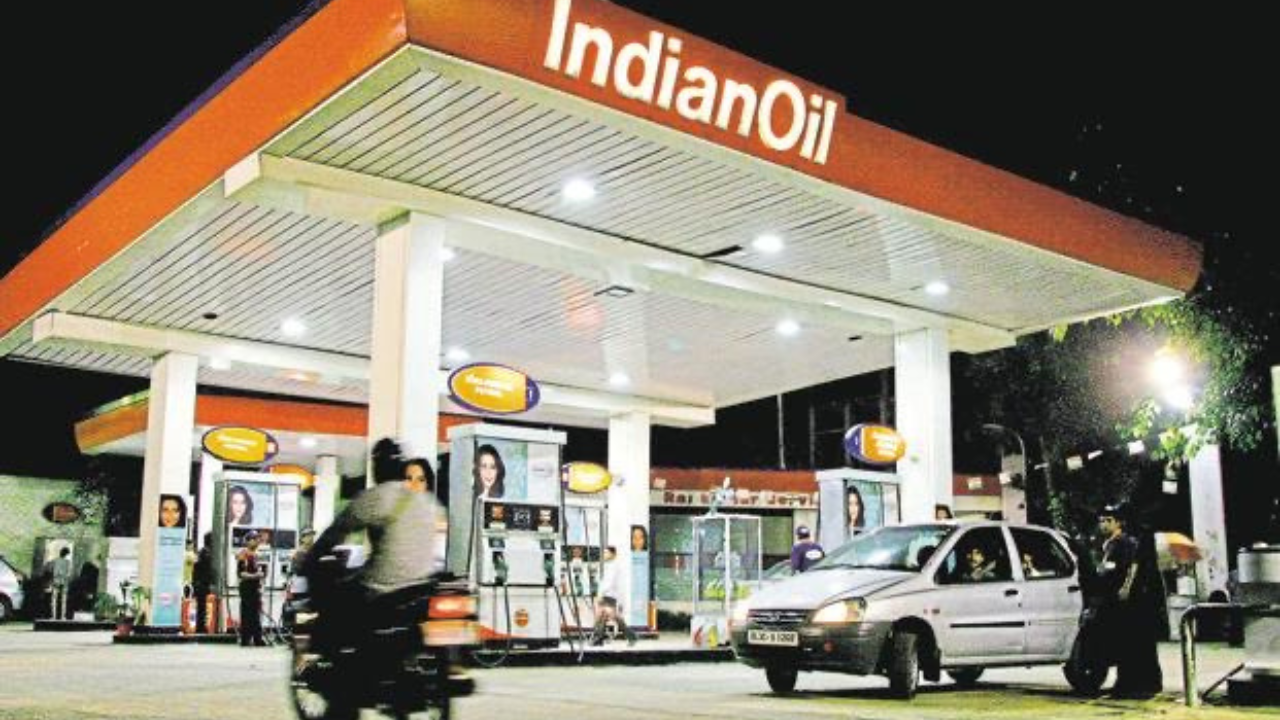
According to a PTI report, the conflict in West Asia triggered a sharp rise in global energy prices. This situation continues to place a heavy burden on India’s state-owned petroleum companies. For the past 10 weeks, Indian Oil Corporation (IOCL), Bharat Petroleum Corporation (BPCL), and Hindustan Petroleum Corporation (HPCL) have continued to sell petrol and diesel at their previous rates, although there was indeed a marginal increase in LPG prices.
As a result, these companies are incurring daily losses (referred to as “under-recoveries”) amounting to ₹1,600–₹1,700 crore. Citing sources, the report indicates that the cumulative under-recovery for these companies over this 10-week period has already exceeded ₹1 lakh crore. Crude Oil Prices Rise, Yet Petrol and Diesel Rates Remain Stable
Even amidst the global crisis, and in compliance with government directives, petroleum companies in India have ensured the uninterrupted supply of oil and gas; furthermore, their prices have been maintained at levels significantly lower than international market rates. This is despite the fact that approximately 40% of India’s crude oil imports, 90% of its LPG imports, and 65% of its LNG imports have been adversely affected.
The magnitude of this situation can be gauged by the fact that since the onset of the conflict in the Middle East, crude oil prices have witnessed a surge of up to 50%. Yet, despite this rise, petrol prices in India remain unchanged at ₹94.77 per liter, while diesel rates have held steady at ₹87.67 per liter.
In contrast, countries ranging from Pakistan to the United Kingdom have witnessed sharp increases in petrol and diesel prices. However, amidst the crisis, companies did raise the price of domestic LPG cylinders by ₹60 each in March—a rate that still remains significantly lower than the actual cost of supply.
Is a Price Hike the Only Option?
According to reports, if elevated crude oil prices persist over an extended period, the operational viability of these companies could be severely compromised, potentially necessitating recourse to borrowing. Citing sources, the reports indicate that Oil Marketing Companies (OMCs) are currently operating under immense financial pressure. Consequently, a hike in petrol and diesel prices has now become a political decision—one that the government alone must undertake. Sources added that while there is no doubt that an increase in fuel prices has become inevitable, the timing and magnitude of such a hike will ultimately be determined by the government. A recent report by *Business Today*, citing sources, suggests that petrol and diesel prices in India could be hiked prior to May 15.