
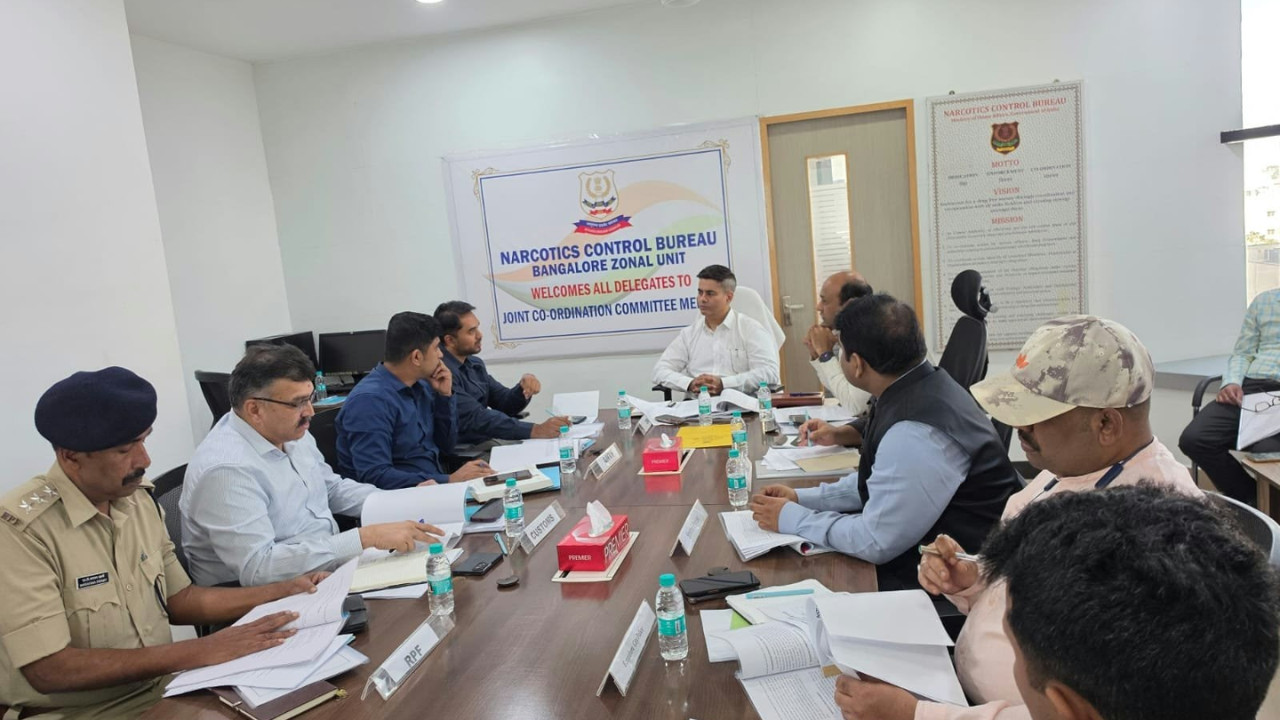
New Delhi: Central and state investigative agencies have joined forces to tighten their grip on the evolving methods used in the international drug trade and trafficking. As part of this effort, the third quarterly State-Level Joint Coordination Committee (JCC) meeting for Karnataka was held in Bengaluru. The objective of the meeting was to enhance the effectiveness of actions against drug trafficking and to strengthen coordination among the various agencies involved.
The meeting was chaired by the Deputy Director General of the Narcotics Control Bureau (NCB), South-Western Region. It was attended by representatives from the National Investigation Agency (NIA), the Enforcement Directorate (ED), the Directorate of Revenue Intelligence (DRI), the Central Bureau of Narcotics, Customs, the Income Tax Department, the Intelligence Bureau, the Railway Protection Force (RPF), the state Anti-Narcotics Task Force (ANTF), and the Karnataka Police.
Discussions focused on emerging trends—such as the rising trafficking of etomidate—as well as strengthening the state ANTF and reviewing actions taken by the ED on cases referred by the JCC. Additionally, the use of preventive detention under the PITNDPS Act in cases related to the Narcotic Drugs and Psychotropic Substances (NDPS) Act was reviewed.
The Railway Protection Force presented documentation regarding cannabis trafficking, while the DRI highlighted issues concerning *hawala* transactions (informal money transfers) and the alleged use of students’ bank accounts—specifically those belonging to African nationals—for illicit financial transfers.
The meeting emphasized the effective implementation of the ‘Drug Control Vision Document’ for the 2026–2029 period. All participating agencies reaffirmed their commitment to coordinated action and the sharing of intelligence.