
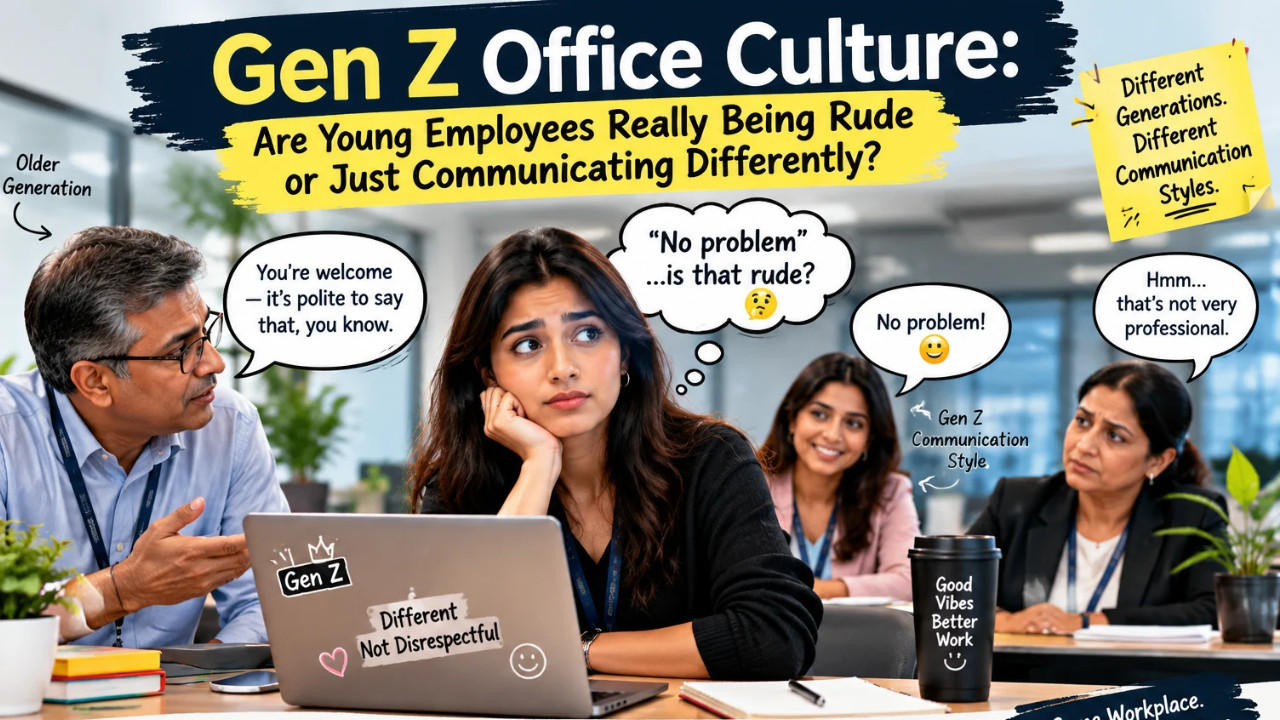

New Delhi: Corporate life is not about finishing tasks, meeting deadlines and reaching targets. The way employees talk with coworkers reply to feedback and chat each day also shapes their image. Even a simple reply such as "No problem" or "You are welcome" can raise questions about workplace etiquette. A 25 year old woman recently shared her experience of working in a place where most coworkersre, over 45. Despite having two years of work experience the 25 year old woman said the 25 year old woman sometimes finds it hard to understand what coworkers expect and worries that the 25‑year‑old woman’s usual way of talking might be seen as unprofessional.
Is Gen Z's Casual Communication Being Misunderstood?
I notice that Gen Z workplace conversations feel more natural when Gen Z conversations are simple, direct and informal. A quick reply, an expression or a short message may seem normal to a young employee. However colleagues from generations may have different expectations about professional communication. The Reddit user highlighted one example: the Reddit user had heard that some people consider saying "No problem" of "You’re welcome" rude. While the phrase is commonly used to acknowledge thanks, its tone and meaning can be interpreted differently depending on the person and workplace culture.
This brings up a question: Are young employees truly being disrespectful or is it just that different ways of talking are causing confusion? Sometimes what looks like rudeness might just be someone communicating in a way that's normal for them. It is easy to misread tone or intent when we are used to a style. Maybe the problem is not disrespect. It is a gap in how we express ourselves. We should look closer before jumping to conclusions. It is easy to misread tone or intent when we are used to a style. Maybe the problem is not disrespect. It is a gap, in how we express communication. We should look closer before jumping to conclusions.
Why Does Gen Z Communicate Differently at Work?
Gen Z has grown up with digital communication, instant messaging and social media, making short replies and informal language a natural part of everyday conversations. However, casual communication does not necessarily mean disrespect. A brief response may simply reflect someone's communication style rather than an intention to offend. The key is to understand workplace expectations and know when to use a friendly, informal tone and when a more professional approach is appropriate.
When Does Casual Talk Become Unprofessional?
The difference between being friendly and looking disrespectful often depends on the situation. Talking in a way with a close coworker might be fine but a formal meeting with a senior manager or a customer might need a different way of speaking.
Short answers: A quick "Okay" might seem fast and to the point for one person but it might feel like its ignoring someone else.
Casual words: Using expressions can help build connections with people you know well but it might not be right for all professional situations.
Comments: Being open and truthful can be good but the words you choose and the way you say them can change how the message is understood.
Text messages: Short texts without a greeting or background information might seem cold even if theres no intention to be rude.
Is ‘No Problem’ Unprofessional?
The expression is not inherently rude or unprofessional. In most situations, both “No problem” and “You’re welcome” are acceptable responses to gratitude. What matters is the context, tone and relationship between the people involved. For instance, “You’re welcome” may be a suitable choice when communicating with senior management, clients or people in formal situations. “No problem” can work equally well in friendly conversations with teammates.
The Real Lesson: Respect Matters More Than the Words Alone
Professional communication does not require employees to use formal language in every conversation. Instead, it involves understanding the environment, respecting colleagues and adjusting one's tone when necessary. A small phrase should not automatically define someone's professionalism. Clear communication, reliability, respect and the ability to work well with others remain far more important in building a positive corporate image. Ultimately, the discussion highlights a familiar workplace challenge: finding the balance between one's natural communication style and the expectations of a professional environment.