



The Haryana Assembly’s winter session this time was not dominated by routine promises or paperwork. Instead, discussion centered on a policy implemented by Punjab’s AAP government that delivered visible ground-level relief to farmers. The “Jiska Khet Uski Ret” policy, which grants farmers ownership over sand deposited on their fields after floods, has now entered Haryana’s political discourse. What began as a regional experiment in Punjab is increasingly being viewed as a practical solution to a shared agrarian problem. Its mention inside the Assembly signaled that farmer distress is forcing political boundaries to blur.
How Did The Issue Gain Momentum Inside Assembly?
AAP’s national media in-charge Anurag Dhandha shared a video from the Haryana Assembly highlighting how multiple leaders demanded implementation of Punjab’s sand policy. His post emphasized that Punjab’s governance model was being openly discussed across party lines. The debate was not ideological but practical. Legislators focused on how Punjab converted flood damage into farmer opportunity. The moment marked a shift from rhetoric to comparison, something ruling establishments often seek to avoid.
What Message Did Kejriwal’s Reaction Send?
AAP national convener Arvind Kejriwal amplified the discussion by reposting the clip. He described it as a moment of pride that Punjab’s governance was being discussed in another state’s legislature. Kejriwal stated that the policy returned farmers their rightful ownership while curbing the sand mafia. His key assertion was political yet pointed: good policies do not recognize borders. The statement positioned Punjab’s move as a replicable governance model rather than a one-time exception.
Why Was Bhagwant Mann’s Endorsement Crucial?
Punjab Chief Minister Bhagwant Singh Mann also retweeted Kejriwal’s post, reinforcing the message that Punjab stands firmly by its decision. This was not symbolic endorsement alone. It underlined the government’s confidence in presenting its policy as a national example. By backing the discussion publicly, Mann signaled that Punjab’s leadership is willing to defend its farmer-first approach and invite scrutiny. The retweet transformed a regional debate into a wider governance conversation.
What Real Benefits Did Farmers In Punjab Receive?
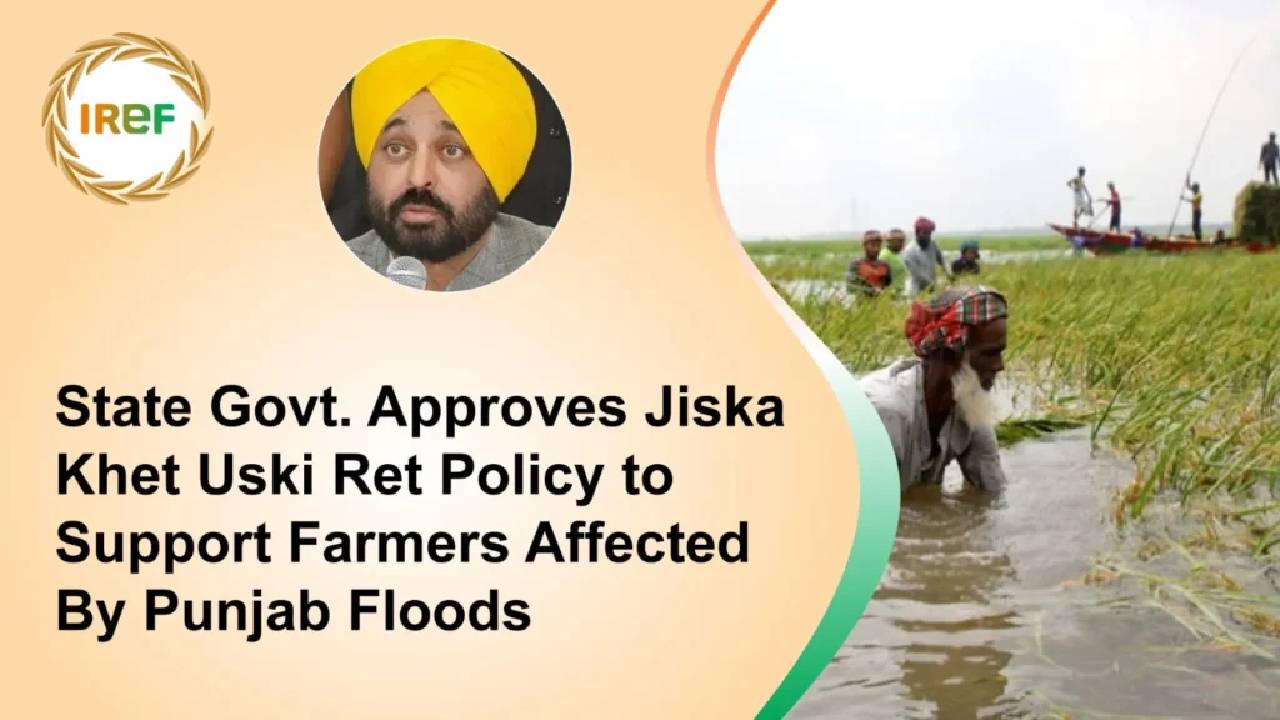
After devastating floods, Punjab classified sand accumulated on farmland as the farmer’s property. Farmers were allowed to remove and sell it legally. This cleared fields for cultivation, enabled timely sowing, and generated additional income. Sand prices reportedly fell by nearly one-third, while illegal mining activities declined sharply. The state also provided machinery support, ensuring the policy did not remain a paper announcement. The outcome was measurable relief, not administrative paperwork.
Why Is Haryana Still Struggling On The Ground?
In contrast, several Haryana districts including Yamunanagar, Ambala, Karnal, Panipat, Sonipat, Kurukshetra, Kaithal, Fatehabad, and Sirsa remain affected. Large stretches of farmland are still layered with sand and silt even by December 2025. Many farmers missed the rabi sowing window. The state government continues to cite legal and procedural hurdles. On the ground, farmers see delay rather than relief. This gap between policy intent and execution has become a source of anger and political pressure.
Will Haryana’s Government Respond To Public Mood?
AAP argues that if Punjab can find solutions during natural disasters, Haryana can do the same. The issue has moved beyond party politics and entered the realm of farmer dignity and rights. The Assembly debate, followed by reactions from national leaders, makes one thing clear: the Punjab model is setting benchmarks. The unanswered question is whether Haryana’s government will act on public sentiment or continue to defer decisions. For farmers waiting in damaged fields, the answer matters more than political statements.