



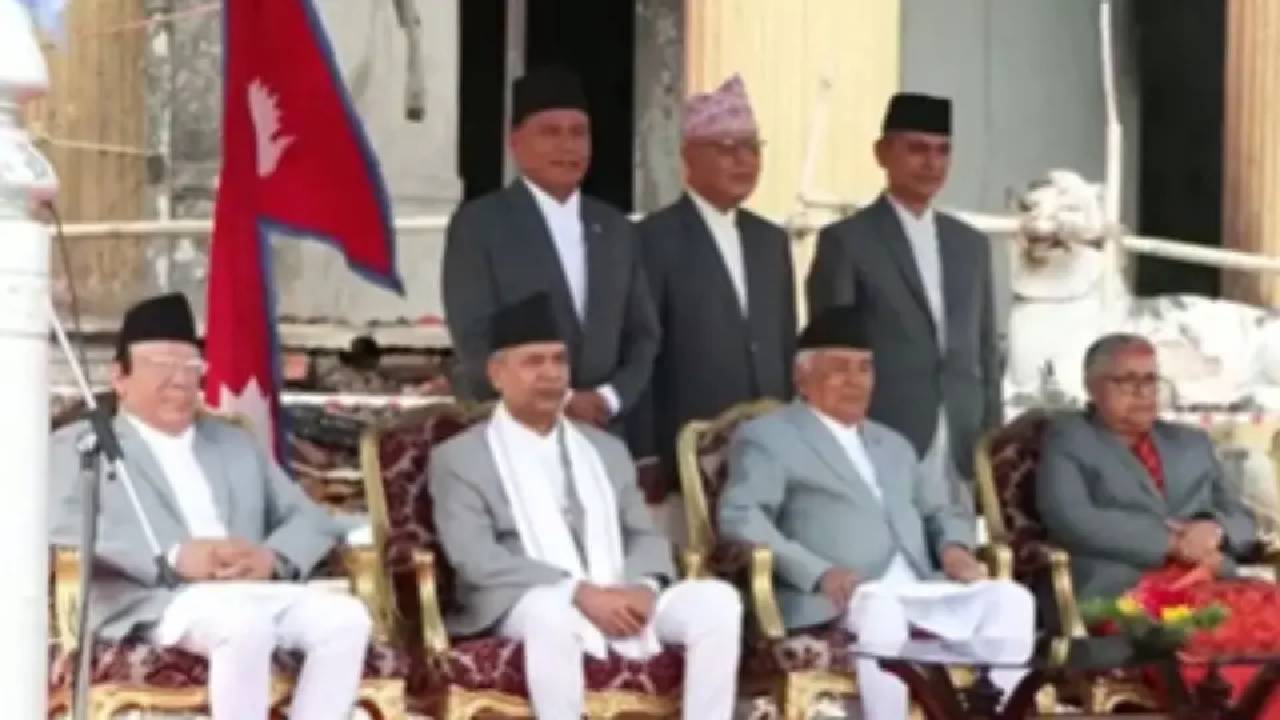
Nepal cabinet news: Nepal’s interim government on Monday saw a major expansion with the induction of three new ministers. Kulman Ghising, Om Prakash Aryal and Rameshwar Khanal took oath as ministers at Shital Niwas, the Presidential Palace in Kathmandu. Pictures from the Presidential Palace show the three leaders taking oath in the presence of top officials. Kulman Ghising has been given charge of the Ministry of Energy, Urban Development and Physical Infrastructure. Om Prakash Aryal will now take charge of the Ministry of Law and Home Affairs, while Rameshwar Khanal has taken charge as Finance Minister.
The cabinet expansion took place on Sunday, a day after Prime Minister Sushila Karki took charge. Later, President Ramchandra Paudel appointed Kulman Ghising, Rameshwar Khanal and Om Prakash Aryal as ministers on the recommendation of Sushila Karki.
Kulman Ghising: The techie who ended the power crisis
Kulman Ghising has been the former Managing Director of Nepal Electricity Authority (NEA). He is credited with ending the power crisis in Nepal and implementing major energy reforms. He has also played an important role in advancing the India-Nepal Energy Trade Agreement, under which a target has been set to exchange 10,000 MW of electricity in the next decade.
Rameshwar Khanal: Disciplined economist
Former Finance Secretary Rameshwar Khanal is known as an advocate of economic reforms. His appointment as Finance Minister is considered important in the direction of restoring investor confidence and strengthening financial discipline.
Om Prakash Aryal: A just and dynamic advocate
Om Prakash Aryal, a lawyer in Nepal’s Supreme Court, is considered close to Prime Minister Sushila Karki. He is an advocate of legal activism and transparency. Aryal has filed more than 50 petitions so far, many of which have been against previous governments. He is also an advisor to Kathmandu Mayor Balendra Shah.
Formation of interim government in Nepal
It is noteworthy that former Chief Justice Sushila Karki has been made the Prime Minister on the recommendation of the ‘Gen Z’ agitating group. The main responsibility of this government is to conduct the general elections to be held on 5 March 2026. She ended the political uncertainty by taking oath on 12 September.
This appointment came after the resignation of the then Prime Minister K.P. Sharma Oli. Oli resigned under pressure from the ‘Gen Z’ movement against social media ban and corruption. At least 72 people died during the protests and many protesters entered the Prime Minister’s office and demanded his resignation.