
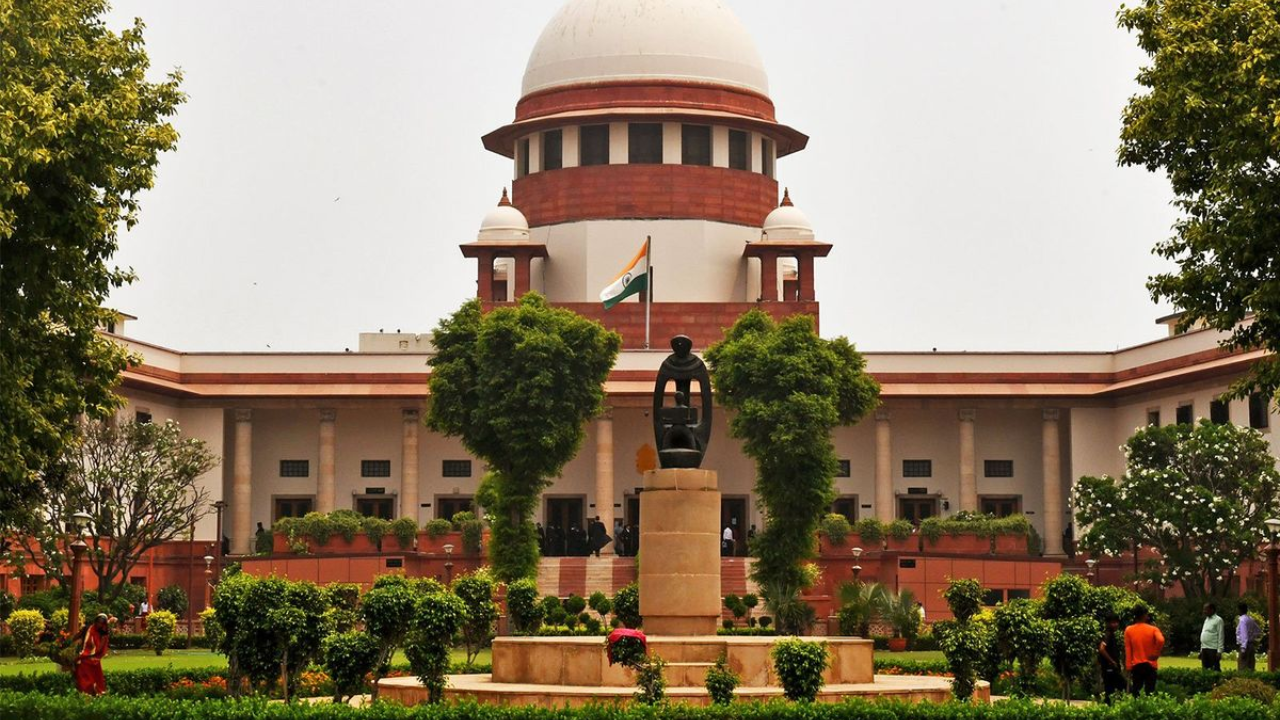
New Delhi: The Supreme Court has taken a firm stand on judicial sensitivity in cases involving sexual offences. It strongly objected to a Patna High Court observation that attempting to remove a woman’s salwar and pressing her chest does not, by itself, amount to an attempt to rape. During the hearing, the apex court stressed that both the language used and the legal approach adopted by courts in such cases must be highly sensitive. It also observed that such remarks could undermine public confidence in the justice system and discourage victims from seeking justice.
What was the decision of Patna High Court?
The case is related to an old criminal case of Bihar. The allegation was that the accused locked the woman in a room and tried to remove her salwar and pressed her chest. The trial court convicted him, considering it a case of attempt to rape. However, while hearing the appeal, the Patna High Court said that the available facts do not prove the crime of attempt to rape. The court accepted that this act falls in the category of outraging modesty of a woman and not an attempt to rape. On this basis, the accused was acquitted of the charge of attempt to rape.
Why did the Supreme Court express its displeasure?
This matter came before the Supreme Court at a time when the apex court was already hearing cases related to sexual crimes on a suo motu basis due to judicial sensitivity. During the hearing, senior advocate Shobha Gupta mentioned the decision of the Patna High Court. After this, the bench headed by the Chief Justice remarked that such decisions need to be considered seriously. The court said that sensitivity and adherence to established legal principles are essential in the approach of judicial officers in cases involving sexual offences.
Has such a controversy arisen before?
This is not the first time that such a comment by a high court has come under the supervision of the Supreme Court. Earlier, in a decision of the Allahabad High Court, the incident of holding the breast of a minor girl, opening the waistband of her pyjamas and pulling them was not considered an attempt to rape. The Supreme Court expressed strong displeasure over that decision, calling it a wrong legal approach and banning related comments. The apex court later clarified that while evaluating such cases, not only the technical aspects but also the intention of the accused and the sequence of the entire incident should be looked at.
What is the court’s stance on judicial sensitivity?
The Supreme Court says that the trial of sexual crimes cannot be limited to legal interpretation alone. The language, comments, and judgements of judges convey a broader message to society. For this purpose, the National Judicial Academy has also been entrusted with the task of preparing guidelines to increase judicial sensitivity in the trial of sexual crimes. The Court wants that a uniform and sensitive approach should be adopted while hearing such cases in courts across the country.
What will happen next?
The Supreme Court has currently registered its serious concern over the decision of the Patna High Court, and the entire issue is being viewed in the context of comprehensive judicial reforms. Legal experts believe that after the strict remarks of the top court, it may also have an impact on the legal interpretation of lower courts and high courts in cases related to sexual crimes in the future. Also, this hearing is being considered important towards strengthening the sensitivity and victim-centric approach in the judiciary.