New Delhi: The Modi government has completed 12 years in power at the Centre. Throughout this period, the Ministry of Education has remained one of the most closely watched ministries, witnessing frequent leadership changes. Between 2014 and 2026, four different leaders headed the ministry. Notably, none of them managed to remain in the position continuously for a full five-year term.
Who got the first responsibility in 2014?
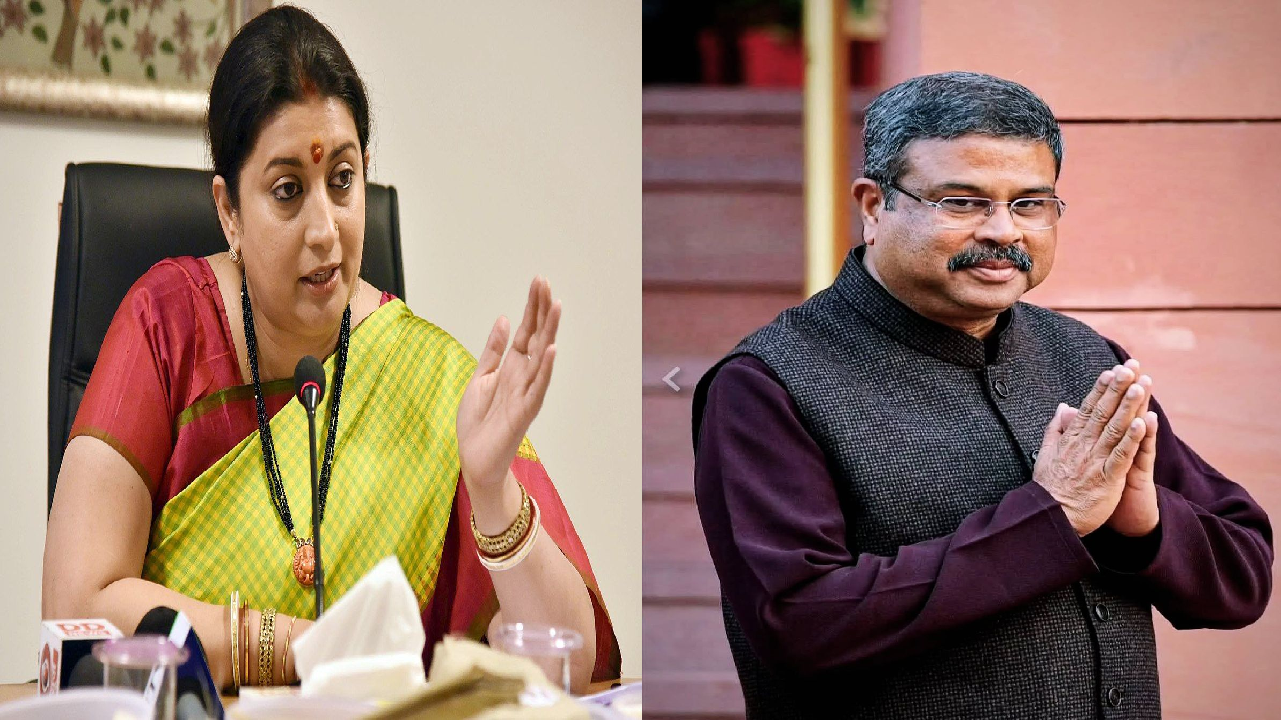
Starting with Smriti Irani. When the Modi government was formed in 2014, the HRD Ministry, i.e., today’s Education Ministry, was handed over to them. She stayed for about 2 years.
Who took command after Smriti Irani?
After that, Prakash Javadekar came in July 2016. Javadekar’s tenure lasted a little longer – about 3 years. There were many debates during his time, but the pace of major changes remained slow. In May 2019, Ramesh Pokhriyal ‘Nishank’ got the responsibility. The time of Corona also came during his tenure. Online studies, cancellation of board exams, postponement of NEET-JEE dates – a lot came before them. But he too could stay only for 2 years.
Why was Dharmendra Pradhan’s tenure the longest?
Then Dharmendra Pradhan came in July 2021. And this is where some stability appeared. He remained the education minister till July 2026, i.e., for about 5 years. For this reason, he became the leader who held this post for the longest time in the Modi government. But ironically, he too could not complete 5 consecutive years.
The accounts of every minister were as follows:
- Smriti Irani – May 2014 to July 2016, about 2 years
- Prakash Javadekar – July 2016 to May 2019, about 3 years
- Ramesh Pokhriyal ‘Nishank’ – May 2019 to July 2021, about 2 years
- Dharmendra Pradhan – July 2021 to July 2026, about 5 years.
Now the question is, what happened by changing ministers so many times?
The effect was clearly visible. The new education policy came in 2020, but it took time to be implemented. Priorities kept changing with every new minister. Some were emphasising digital education, while others were talking about studies in their mother tongue. Issues like transparency in recruitment examinations and stopping paper leaks were raised every time, but no concrete solution was found. Students, teachers and parents all wanted that there should be uniformity in education. But due to a change of face every 2-3 years, the policy also remained incomplete.
Now what will be the challenge before the new education minister?
Now, after the departure of Dharmendra Pradhan, the ball is again in the court of the new minister. The biggest challenge before them is to bring back the trust of the students. Paper leaks like NEET have raised questions on the entire system. It is most important now to make the examination transparent and to prevent cheating and leaks. Also, the new education policy will have to be implemented in reality in schools and colleges, not just on paper.
The quality of higher education has to be improved so that our children stay here instead of going out. 4 ministers changed in 12 years. Now it remains to be seen how much stability and how much change the 5th Minister can bring. Because there is very little scope for experimentation in matters of education. Here, the price of every mistake has to be paid by the future of the children.