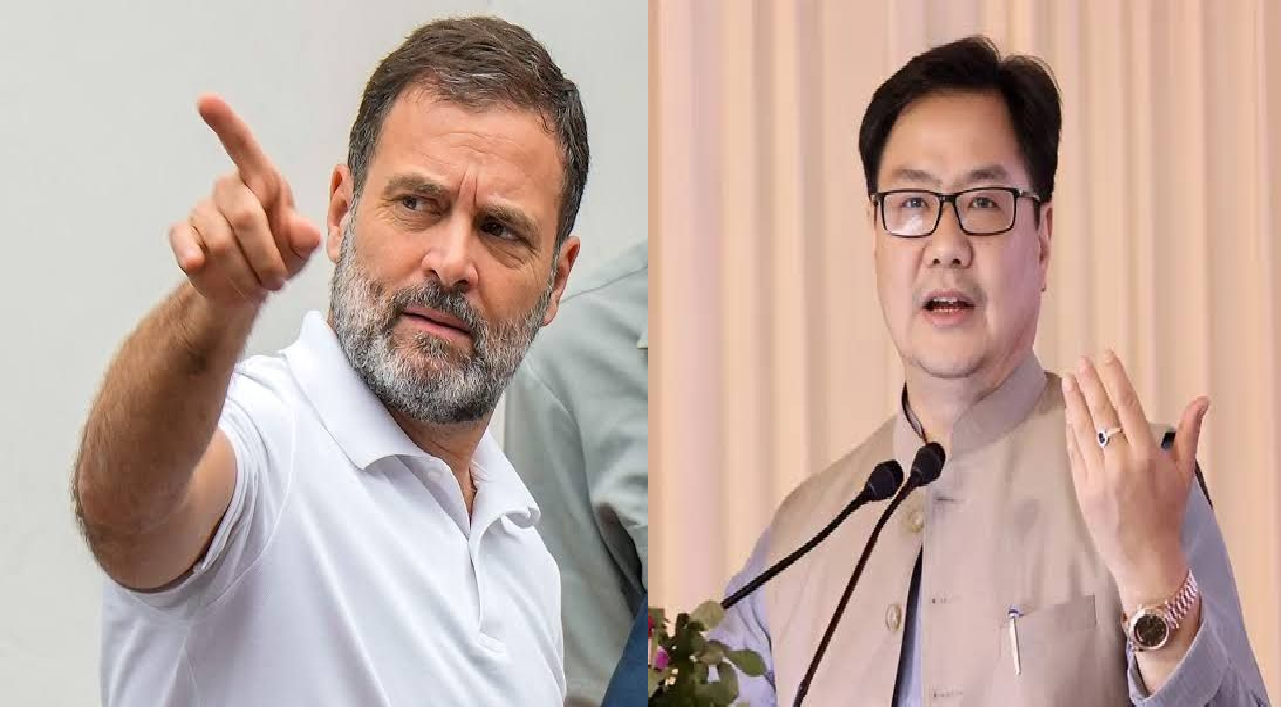
New Delhi: The discussion on the public examination system and the student movement in the Lok Sabha turned contentious on Wednesday as the ruling party and the opposition clashed during Leader of the Opposition Rahul Gandhi’s speech. Backing the students’ movement, Gandhi questioned the education system, the Rashtriya Swayamsevak Sangh (RSS), and the Centre’s policies. BJP MPs strongly objected to his use of the term “andhbhakt” (blind devotee), triggering sharp protests in the House.
After this, the allegations levelled against Union Home Minister Amit Shah further heated the atmosphere. Amidst the continuous uproar, Speaker Om Birla had to intervene and give instructions to remove the controversial comment from the proceedings.
What argument did Rahul give regarding the students’ movement?
Rahul Gandhi said that the youth who took to the streets angry over paper leaks and irregularities in recruitment examinations should not be looked at in a bad light. According to him, the protesting students were worried about the future of the country, and it is the responsibility of every democratic system to listen to their voices. He said that the anger of the youth is not against any political party, but against the system in which, despite hard work, they are not getting justice. Rahul claimed that the demand for change was clearly visible in the students’ protest, not violence or hatred.
Why was there so much controversy over the word ‘andhbhakt’?
During the speech, Rahul used the word ‘andhbhakt’ while giving an example. This is where the matter deteriorated. Parliamentary Affairs Minister Kiren Rijiju immediately stood up. Terming it unparliamentary, he said that such language does not suit the leader of the opposition. BJP MPs also started raising slogans and demanded that the word be removed from the record. Speaker Om Birla heard both sides and finally ordered that the word be removed from the proceedings. But the uproar still did not stop.
How did the comment on Amit Shah increase the controversy?
Amidst the uproar, Rahul Gandhi also targeted Union Home Minister Amit Shah, referring to the police action taken during the student movement. He alleged that accountability should be fixed at the top level for the action taken against students. After this statement, the ruling party expressed strong protest. BJP MPs said that making serious allegations against the Home Minister without any facts is against parliamentary traditions. Some MPs also demanded that Rahul Gandhi explain the basis of his statement.
What was the government’s response?
Kiren Rijiju hit back. He said that if allegations are to be made in the House, facts will have to be brought along with them. Rijiju directly asked, “Do you have any proof? If not, then apologise.” The Speaker also appealed to everyone to maintain decorum and not accuse anyone without proof.
What did Rahul Gandhi say about the education system and RSS?
In his address, Rahul Gandhi also raised questions on the education system. He alleged that ideological interference in the education system has increased and due to this there is dissatisfaction among the students. Taking the name of former Education Minister Dharmendra Pradhan, he said that decisions were being taken from somewhere else. According to Rahul, the students’ struggle is not against any one minister but against the entire system. BJP rejected these allegations as politically motivated and said that the government is continuously working on education reforms.
How much impact did the uproar have on the proceedings?
After the speech, sloganeering continued in the House for 20-25 minutes. The opposition was demanding discussion on the student movement; the ruling party was adamant on apologising. The Speaker had to intervene several times. Due to the uproar, Question Hour was also affected, and the proceedings had to be adjourned for some time. Now student agitation, police action and statements of leaders have become the biggest issues of the monsoon session.