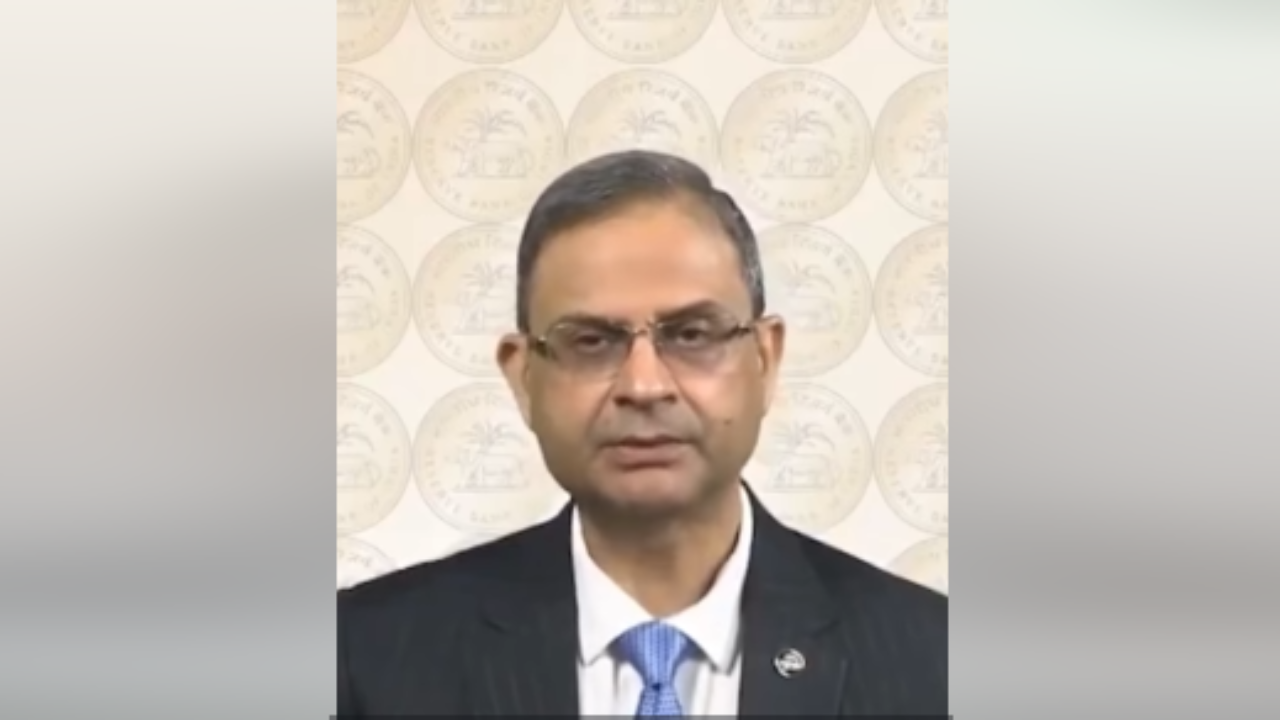
New Delhi: The Reserve Bank of India’s (RBI) Monetary Policy Committee (MPC) has kept the repo rate unchanged at 5.25 percent for the second straight policy meeting. Announcing the monetary policy review on Tuesday, RBI Governor Sanjay Malhotra said the decision was taken amid global uncertainties, rising tensions in West Asia, and volatility in crude oil prices. As a result, borrowers with home loans, auto loans, and other floating-rate loans will not see any immediate change in their EMIs.
What were the important decisions of MPC?
The Monetary Policy Committee has kept the repo rate unchanged at 5.25 percent. Along with this, the Standing Deposit Facility (SDF) rate has been maintained at 5 percent, and the Marginal Standing Facility (MSF) and bank rate have been maintained at 5.50 percent. RBI says that keeping interest rates stable in the current economic conditions will be a balanced step for the economy and financial markets.
What will be the impact on EMI?
Due to no change in the repo rate, the cost for banks to take loans from the RBI will also remain the same as before. In such a situation, there will be no immediate change in the EMI of those customers who have taken home loans, car loans, or other retail loans on floating interest rates. Banks are also not indicating the possibility of any major revision in their interest rates at present. This means that interest rates for both existing borrowers and new borrowers are expected to remain stable for now.
What did RBI say on the global situation?
Governor Sanjay Malhotra said that geopolitical tensions still remain a matter of concern in many parts of the world. The ongoing conflict in West Asia and fluctuations in crude oil prices in the international market may have an impact on the global economy. In such an environment, it is necessary to adopt a cautious monetary policy. He said that India’s economy is in a strong position, but external risks are being constantly monitored.
What is the estimate regarding growth rate and inflation?
RBI has increased the estimate of gross domestic product (GDP) growth rate for the financial year 2026-27 to 6.7 percent, which was earlier 6.6 percent. At the same time, the estimate of retail inflation has been reduced to 5 percent. The central bank believes that some pressure on food prices is likely to remain, but better supply and policy measures will help keep inflation under control.
What could be RBI’s strategy going forward?
Experts believe that the next step of the RBI in the coming months will depend on inflation, the global economic situation and the domestic demand situation. If inflation remains controlled and global conditions are favourable, new decisions can be taken regarding interest rates in the future. At present, the Central Bank has clearly indicated that its priority is to maintain the pace of economic growth while keeping inflation under control. In such a situation, currently the loan takers will have to wait for either relief in EMI or an additional burden.