
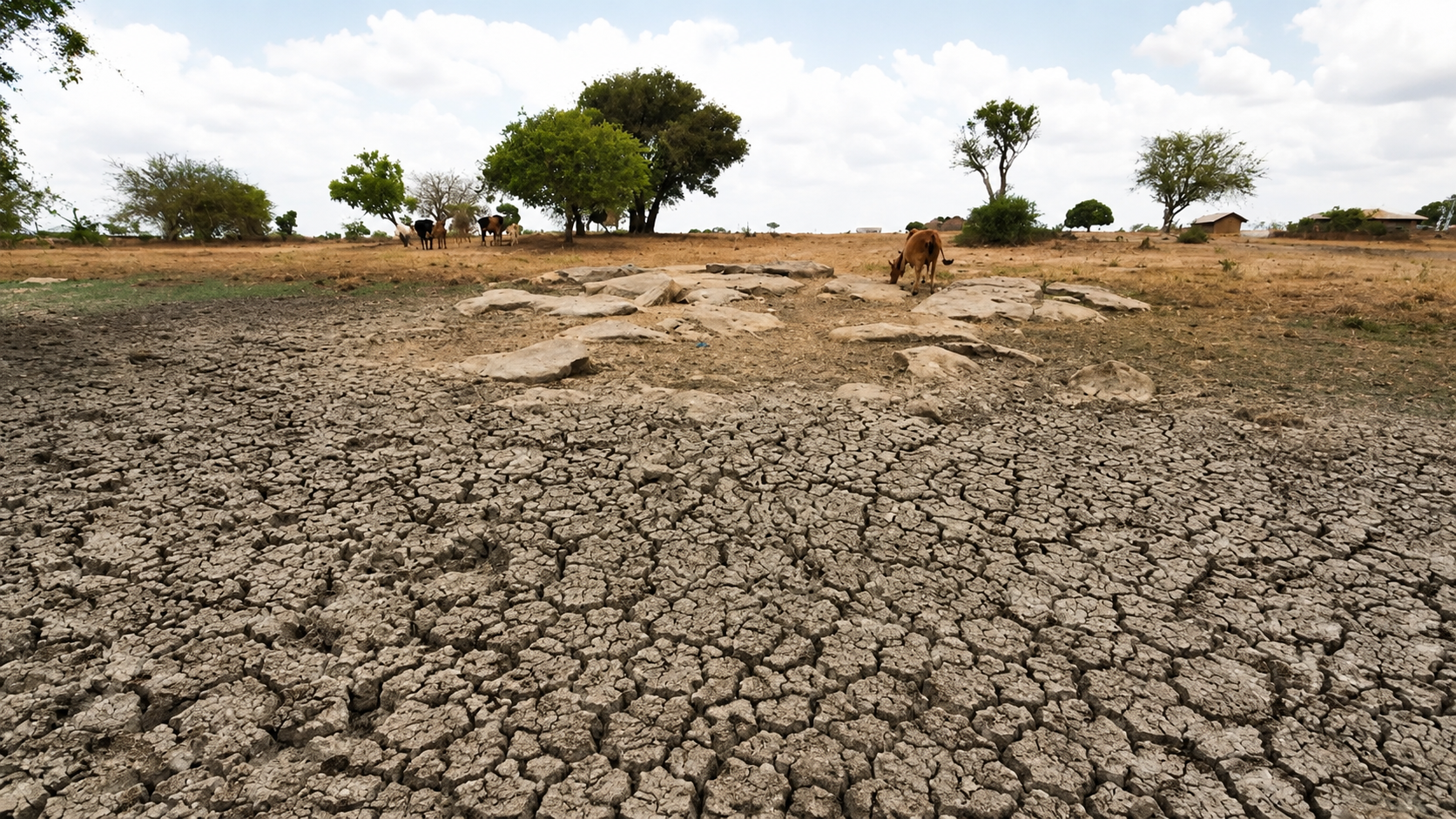
New Delhi: El Nino developing in the Pacific Ocean has become a matter of great concern for meteorologists this year. Many international agencies, including Britain’s Meteorological Department, are considering it as an unusually strong event. According to the latest report from Reuters, the El Nino developing in 2026-27 could be among the most powerful events on record. The UK Met Office estimates that sea surface temperatures in the equatorial Pacific could rise by more than 3 degrees Celsius. It is expected to have an impact on global temperature, rainfall and agriculture.
Will El Nino be stronger than usual this time?
The British Meteorological Department had confirmed El Nino in June itself. According to the department, this phenomenon has now developed in the Pacific Ocean and is likely to strengthen during the rest of the year. Initial estimates suggested an abnormal increase in sea surface temperatures of more than 2 degrees Celsius, while some models are pointing to even higher temperatures. However, scientists have also clarified that there is still uncertainty regarding the final peak intensity.
Why increased concern for India’s monsoon?
El Nino can affect the weather of South and Southeast Asia, including India. The risk of drought-like conditions in India generally increases during a strong El Nino. This year, in April itself, the Indian Meteorological Department had predicted the south-west monsoon rainfall across the country to be below normal. The IMD had estimated rainfall during June to September to be around 92 per cent of the long period average. At that time the department also said that there was a shift from weak La Niña-like conditions in the Pacific to ENSO-neutral conditions and that El Nino could develop during the monsoon.
Will there be a direct impact on Kharif crops?
Shortage of monsoon rain or its uneven distribution can become a challenge for the agriculture sector. Sowing and productivity of crops like paddy, pulses, oilseeds and sugarcane largely depend on rainfall and soil moisture. According to Reuters, a strong El Nino risks reducing rainfall in India and Thailand and increasing pressure on agricultural production. However, due to better food grain reserves and agricultural technology at the global level, the ability to handle the possible impact has also increased to some extent.
Why is there a possibility of 2027 becoming the hottest year?
The effect of El Nino is not limited to rain only. The warming of the Pacific Ocean also causes a temporary rise in global temperatures. Britain’s Met Office said in June that the event could lead to a rise in global average temperatures next year, with 2027 set to top the hottest years on record. However, this estimate does not take into account the additional impact of El Niño on top of the long-term warming caused by climate change.
How is El Nino formed?
El Niño develops when sea surface temperatures in the equatorial Pacific Ocean become significantly warmer than normal. With it comes changes in trade winds and atmospheric circulation. This may affect rainfall and temperature patterns in countries located thousands of kilometers away from the Pacific region. This is the reason why changes in the Pacific Ocean have the potential to affect the weather ranging from India’s monsoon to South America and Australia.
Why does the risk of drought increase at some places & flood at other places?
El Nino does not have the same effect in different parts of the world. The risk of drought may increase in some areas, while above normal rainfall and flooding may occur in other parts. According to Reuters, there is a possibility of heavy rain in some areas of South America, with the risk of drought increasing in parts of South and South-East Asia. In such a situation, weather uncertainty may increase in the coming months and its impact on agriculture, water resources and food prices may be seen.