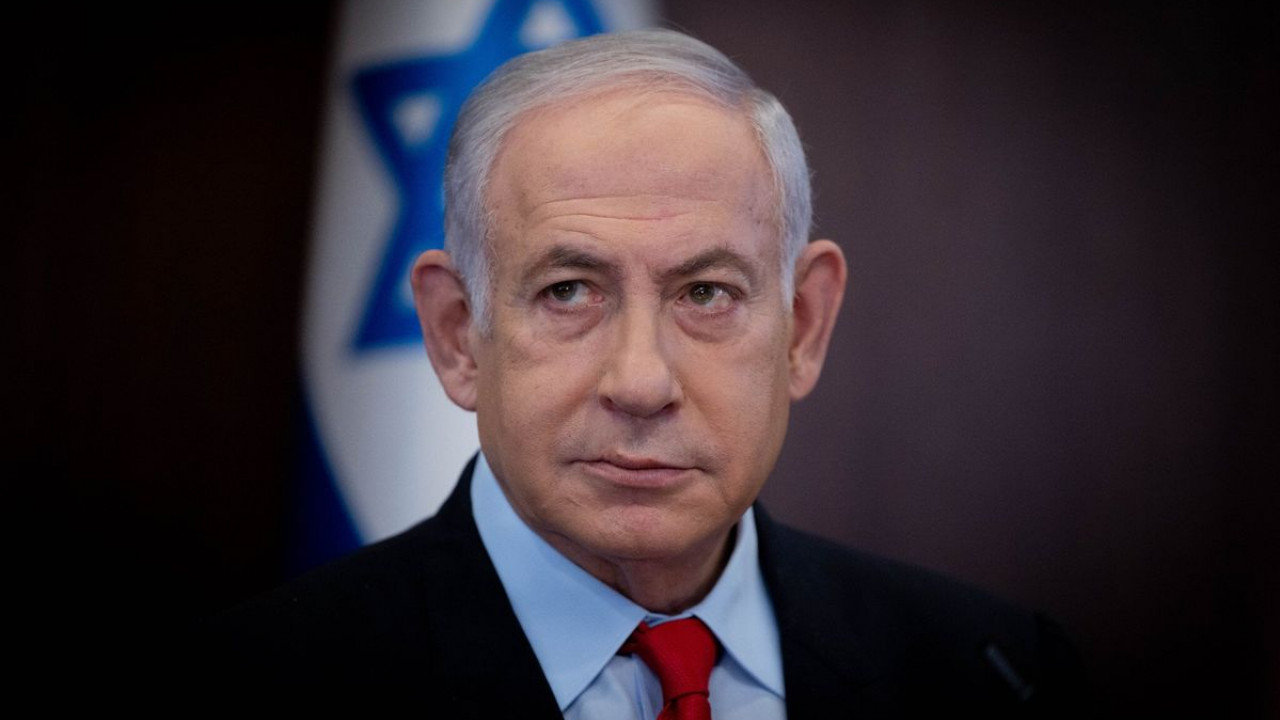
Tel Aviv: There is intense political activity in Israel regarding the elections to be held on October 27. Prime Minister Benjamin Netanyahu faces the challenge of saving power, while former military chief Gadi Eysenkot is giving him a tough fight from the opposition. There is also a party in discussion in this election, whose name sounds like ‘Ra’am’. The name of this party is Ra’am and its leader is Mansoor Abbas. If after the elections no alliance gets majority in the Parliament, then the role of this party can be important. However, Netanyahu and his main rival Eizenkot have expressed their reservations about a coalition with Arab parties. In such a situation, the path to forming a government does not seem easy.
How are elections held in Israel and how many seats are required to form a government?
The Israeli parliament is called the Knesset, which has a total of 120 seats. To form a government, the support of at least 61 MPs is required. Unlike India, in Israel separate MPs are not elected from each constituency. Here voters vote for a political party list rather than a candidate and parties get seats based on the proportion of votes received across the country.
Israel’s system of proportional representation allows many political parties to enter parliament. In such a situation, it becomes difficult for any one party to gain majority alone and different parties have to come together to form the government. After the elections, the President consults with political parties and invites a leader to form the government. He has to garner the necessary support in Parliament.
Why is there a tough competition between Netanyahu and Gadi Eizenkot?
In this election, the contest between Benjamin Netanyahu’s Likud Party and Gadi Eysenkot’s Yashar Party is considered important. Netanyahu has long played an influential role in Israeli politics, but questions have been raised about his government regarding the Hamas attack of October 7, 2023 and the war that followed.
On the other hand, former army chief Aisenkot has made security arrangements, government accountability and national unity an important part of his election campaign. Pre-election surveys have shown a tight race between the two parties. However, it may be challenging for any alliance to cross the 61 seats mark.
Who is the ‘Ra’am‘ party in Israeli politics?
The name of the party about which there is discussion is Ra’am. It is also called United Arab List and is led by Mansour Abbas. This party mainly raises the issues of Arab citizens of Israel. These include topics like local development, public facilities, education and community safety.
Ra’am set an important political precedent by joining Israel’s coalition government in 2021. This made it clear that a party representing Arab citizens can also have influence in the government formation process. This time too, party seats may be important, especially if no big alliance is able to get a majority on its own.
Can a new government be formed with the support of Ra’am Party?
Ra’am’s role in the mathematics of government formation is under discussion because any alliance may need the support of other parties for majority. If Raam wins enough seats, its support could prove useful for an alliance.
However, there is a major hurdle in this equation. Gadi Eizenkot has publicly stated that Ra’am will not be a part of his government in its current form. Netanyahu and other opposition leaders have also pointed to limitations on alliances with Arab parties. In such a situation, winning the election of Raam and supporting any government are two different things.
Why are Israel’s Arab voters important in the elections?
Arab citizens constitute about 20 percent of Israel’s population. Being citizens of Israel, they can vote in the elections there. However, Palestinians living in Gaza and the West Bank have separate civil and political status and do not have the right to vote in Israeli parliamentary elections.
Arab voter participation and the performance of their affiliated parties could impact the outcome of the election. Ra’am leader Mansour Abbas has also appealed to the Arab community to participate in the voting. The party says that the problems of the community can be conveyed to the government through political participation.
Can there be political uncertainty again in Israel after the elections?
If no coalition is able to muster a majority of 61 seats, then there may be long talks to form a government in Israel. Political parties will have to find a way to have a common programme and support despite their differences. If this does not happen, political deadlock may arise and there may be a need for re-election.
Therefore, there is certainly a discussion on the role of the Ra’am party, but it is too early to say that Israel’s next government will be formed with its support. The election results, the parties’ actual seats and coalition talks will decide whether Netanyahu will remain in power or the opposition will be successful in forming a government.