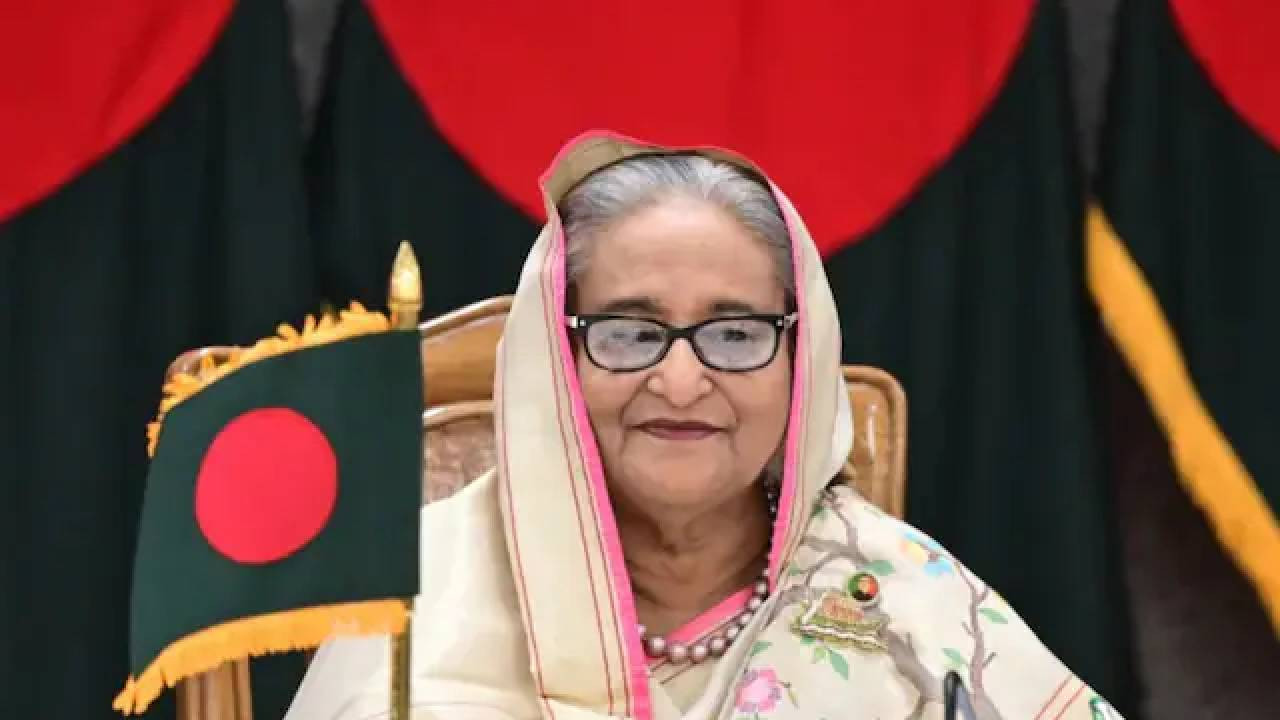
New Delhi: Former Bangladesh Prime Minister Sheikh Hasina’s government was ousted from power in August 2024 following widespread protests. Her son, Sajeeb Wazed Joy, has now alleged that the United States played a role in the overthrow of his mother’s government.
Joy claimed that the then-Joe Biden administration allegedly provided $50 million (over 4 billion rupees) in funding through the US agency USAID. However, he did not provide any documentary evidence to support his allegations, and these claims have not been independently verified.
What allegations were made against the Biden administration and USAID?
Sajeeb Wazed Joy made the allegations at a press conference organized by the Center for US-Bangladesh Relations in Washington. He claimed that the then-Biden administration supported activities that contributed to Sheikh Hasina’s ouster in August 2024.
According to Joy, the US Agency for International Development (USAID) and several organizations involved in promoting democracy helped mobilize groups involved in the protests. He said, “The Biden administration was heavily involved in this regime change. USAID provided $50 million in funding for this regime change.”
Also accused of organizing and training protesters
Joy also accused the National Democratic Institute and the International Republican Institute, claiming that these organizations helped organize and train groups that later participated in the protests and unrest. The program included supporters and former officials of Sheikh Hasina’s party, the Awami League.
Claims of handing over power to Muhammad Yunus under US pressure
Sajeeb Wazed Joy also made claims about Muhammad Yunus, the former head of Bangladesh’s interim government. He alleged that Yunus was appointed to head the interim administration following US diplomatic pressure on Bangladesh’s military leadership. According to Joy, the US ambassador in Dhaka influenced the process of appointing Yunus as head of the interim government.
Allegations of increased activity of extremist organizations in Bangladesh
On regional security, Joy leveled serious accusations against the regime that succeeded Sheikh Hasina. He claimed that some convicted militants were released during the new administration, allowing extremist organizations to regain their influence.
He cited the release of prisoners allegedly involved in attacks involving foreign nationals and claimed that militant groups linked to Pakistan had increased their activities in Bangladesh.
Joy also alleged that individuals associated with Lashkar-e-Taiba have appeared at public gatherings in Bangladesh. According to him, the changing political and security dynamics in Bangladesh pose a potential threat to India and the entire region.
Questions were also raised on the growing relations with China
Joy alleged that Dhaka’s ties with China have strengthened since Sheikh Hasina’s ouster, benefiting Chinese companies. He also claimed corruption plays a role in business relationships with Chinese companies.
What did he say about the purchase of 29 Boeing aircraft?
Questioning Bangladesh’s economic and commercial ties with the United States, Joy claimed that the country lacks sufficient financial resources to fulfill its obligations under major business agreements with American companies. He cited agreements involving US energy company Excelerate Energy and aircraft manufacturer Boeing.
“They have contracted 29 Boeing aircraft. The Bangladesh government doesn’t have the money to pay for them,” Joy said, adding that US energy suppliers are not receiving full payment under existing agreements.
Former official expresses concern over political instability in Bangladesh
Ahmed Kaikaus, a former senior official in Sheikh Hasina’s government, also expressed concern about the political situation in Bangladesh. He said that political instability and weakening of institutions are affecting investor confidence and threatening the country’s economic growth.
According to Caucus, the US and other international partners should encourage dialogue, due process, and peaceful political competition rather than exacerbating political divisions in Bangladesh. It is worth noting that Sheikh Hasina’s government was ousted from power in August 2024 following widespread protests. Following this, Mohammad Yunus was appointed head of the interim government. In subsequent elections, the Bangladesh Nationalist Party (BNP) came to power, and Tarique Rahman became the country’s Prime Minister.