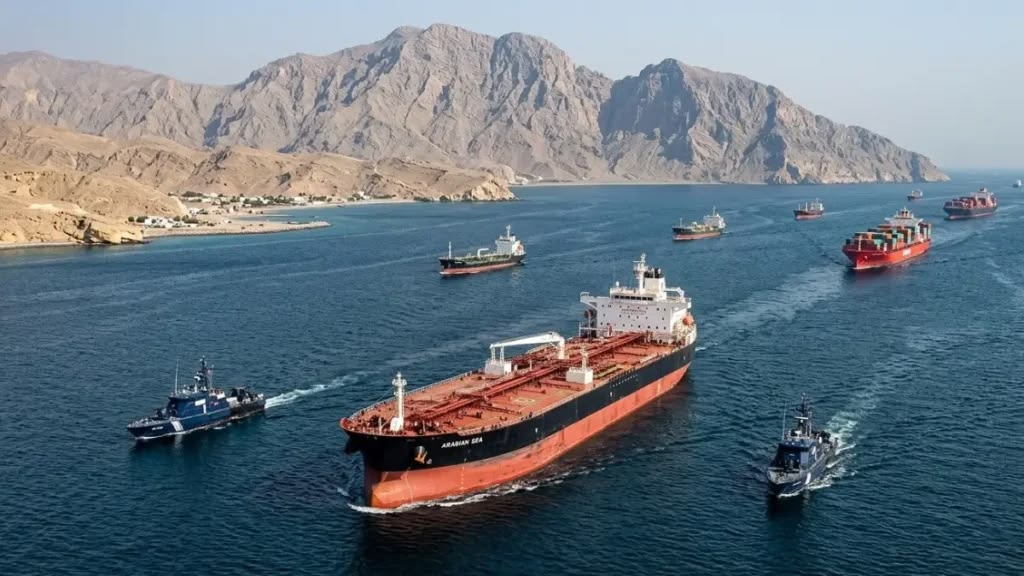
New Delhi: After the recent agreement between America and Iran, the movement of ships in the Strait of Hormuz, one of the world’s most important maritime trade routes, has gradually started normalising. Iran’s new body Persian Gulf Strait Authority (PGSA) has issued new guidelines for the movement of ships, the purpose of which is said to be to organise security and traffic.
What are the new rules of PGSA?
According to Iran, ships transiting the Strait of Hormuz must submit transit requests at least 48 hours in advance. Ships will also have to give information about their route and time in advance so that safe movement can be ensured. Currently, security, insurance and other transit charges have been waived for 60 days.
What was the impact of the US-Iran agreement?
After the recent US-Iran agreement, the process of reopening the Strait of Hormuz has started. Under this agreement, it has been agreed to normalise maritime trade and reduce regional tensions. After the agreement, many cargo and oil tankers have started using this route again.
Why is this development important for India?
India imports a large part of its energy needs from Gulf countries. In such a situation, normalisation of traffic in the Strait of Hormuz is being considered as news of relief for India. According to reports, many ships coming towards India have also started passing through this route.
Can charges be imposed again in future?
Although all duties have been waived for 60 days now, Iran has indicated that insurance or maritime security duties could be imposed at a later date. This has increased the concern of global shipping companies and energy markets.
What will be the impact on the global oil market?
Experts believe that if traffic remains normal in the Strait of Hormuz, global oil supply will strengthen and pressure on crude oil prices may reduce. This is expected to provide stability to energy markets around the world.
Why is the world worried about Hormuz?
The Strait of Hormuz is considered the lifeline of global energy supplies. A large part of the world’s total maritime oil trade passes through this route. The exports of major oil producing countries like Saudi Arabia, Iraq, Kuwait, UAE and Iran depend on this route.
In such a situation, any kind of tension or disruption here can lead to a sharp rise in crude oil prices and affect the global economy. This is the reason why the normalisation of this sea route after the US-Iran agreement is being considered a positive sign for the international market and energy sector.