New Delhi: Reinforcing its commitment to prioritizing safety within Indian Railways, Northern Railway organized safety and quality improvement camps in the Firozpur and Ambala divisions. These camps not only familiarized railway personnel with the nuances of safe working practices but also placed special emphasis on maintaining quality standards during railway infrastructure upgrade projects. The objective was clear: accelerate the pace of railway development without compromising on safety.
These camps are considered a vital component of the railway’s safety framework. Employees received practical training—particularly regarding safe work execution during 2×25 kV upgrade projects, fostering better inter-departmental coordination, and ensuring on-site quality checks.
123 Railway Personnel Trained in Jalandhar
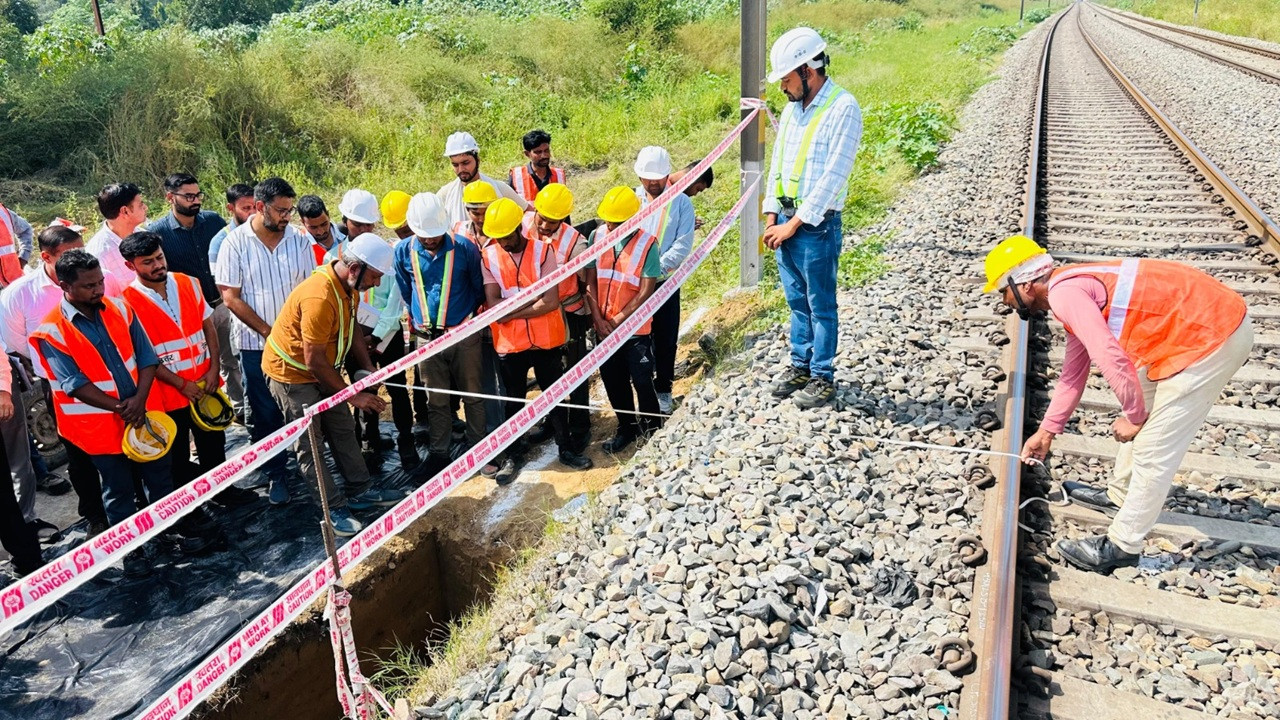
A total of 123 participants—including railway staff, project unit personnel, employees involved in power supply and distribution, and project officers—took part in the safety and quality improvement camp organized by the Firozpur Division in Jalandhar. The camp featured on-site practical demonstrations of safe working practices and quality inspection procedures to be followed during foundation casting. During the training, employees were taught that a strong foundation for any construction project is built not merely through materials but through strict adherence to prescribed safety standards and technical quality parameters. Emphasis was placed on the use of safety equipment at the worksite, exercising caution, and following established protocols.
131 Participants Learn Safety Essentials in Ambala
As part of this initiative, a camp focused on safety and quality improvements—related to the upgrading of overhead electrical equipment and power supply installations on the Delhi Junction–Ambala Cantt and Sanehwal–Saharanpur rail sections—was organized in Ambala. A total of 131 participants, comprising 119 railway staff members and 12 officers, attended the event. During the camp, staff and officers were briefed on practical challenges encountered during upgrade works, safe working practices, and key aspects of quality control. The objective of the training was to ensure that project activities adhered to prescribed standards and that the safety of train operations remained uncompromised at any stage.
Strict Safety Protocols for Cranes and JCBs
Both camps emphasized the need for extreme caution when operating cranes, JCBs, and excavators near railway tracks. The operation of heavy machinery in the vicinity of tracks is considered a highly sensitive matter. Consequently, staff were instructed that the safety of railway lines, signaling systems, telecommunication networks, and other critical infrastructure must be the top priority during work. Emphasis was also placed on coordination, vigilance, and adherence to established safety procedures at the worksite to ensure safe train operations. The training highlighted that even minor negligence could lead to major accidents, making the responsibility of every employee at the worksite crucial.
Quality Benchmarks: From Foundation to Wiring
Various sessions of the camp provided detailed training on safety and quality precautions to be observed during foundation casting, mast erection, precise positioning, backfilling and stabilization, installation of power supply wires, and the laying of underground earthing conductors. Railway staff were advised that the goal of any upgrade project should not merely be the completion of work; rather, the quality of the work and future safety must be accorded equal importance. To this end, the roles of construction materials, installation procedures, technical parameters, and on-site quality inspections were highlighted.
A Safety Shield That Withstands Storms and Rain
The training also included a special discussion on safety measures for working during adverse weather conditions. Employees were briefed on the precautions to be taken during heavy rain, storms, poor visibility, or other emergencies. Additionally, training was provided on protocols for reporting accidents or emergencies, immediate response, rescue operations, and inter-departmental coordination. Officials emphasized that even a few minutes of prompt action during an emergency can play a decisive role in safeguarding lives and property.
Safety and Quality: The True Engines of Railway Momentum
The overarching objective of these safety and quality improvement camps organized by Northern Railway is to advance the upgradation of rail infrastructure in a manner that ensures safety, orderliness, and high quality. These training programs will help raise safety awareness among employees and foster better coordination across various departments. Northern Railway’s message is clear: while the speed of railway operations is important, the safety of that speed is paramount. Behind every train racing along the tracks lies the hard work and vigilance of thousands of railway personnel. It is this vigilance that strengthens railway development and ensures the assurance of safe journeys for passengers.