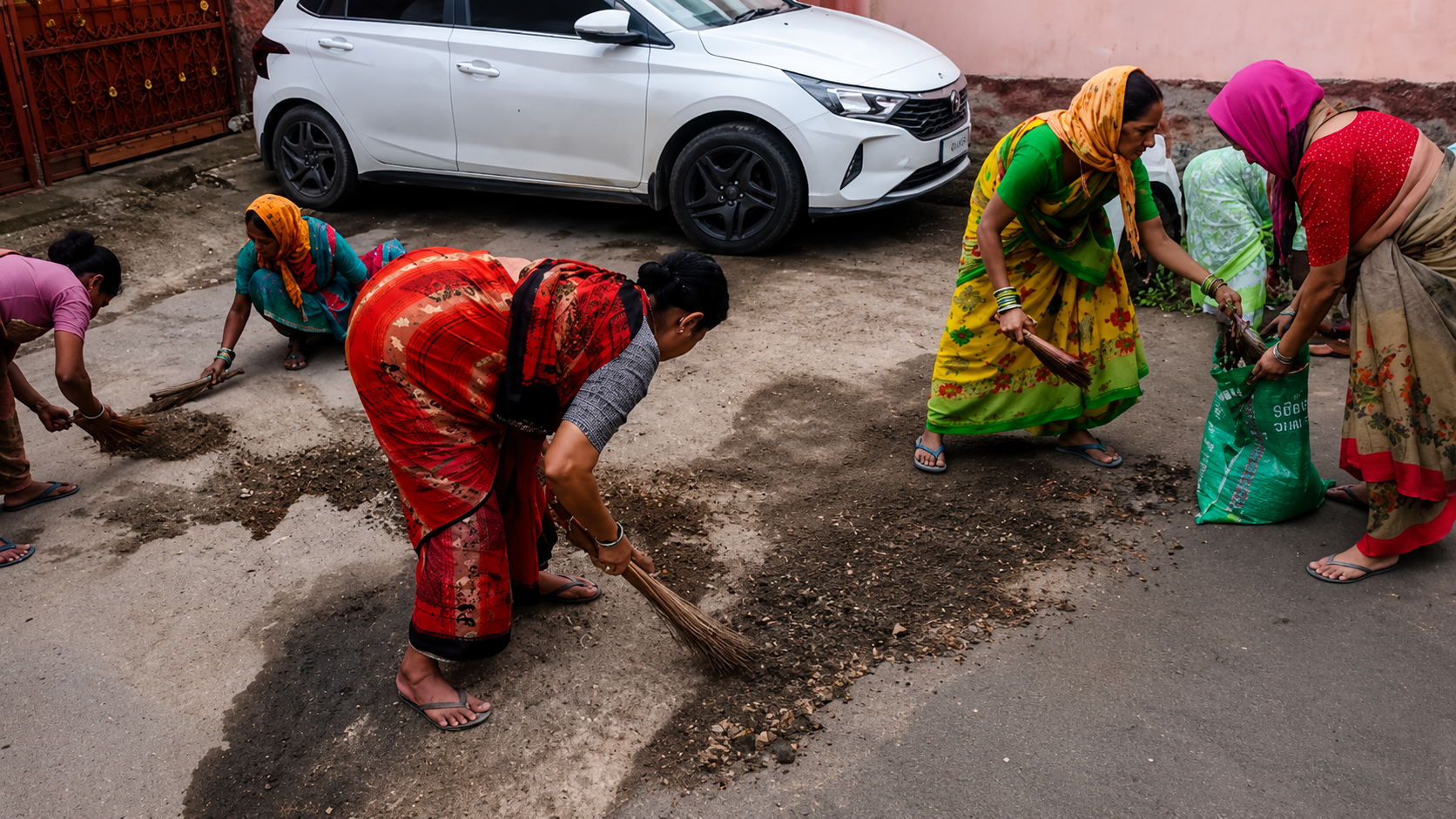
New Delhi: Some videos that surfaced from Gulzar Hauz area of Hyderabad have caught people’s attention. In these, women are seen collecting dust and dirt by sweeping the roads and footpaths. At first glance, it seems like a normal cleaning job, but there is a possibility of finding very fine particles of gold and silver behind this dust. This area is located near Charminar and has been known for gold and silver business for a long time.
Where does gold come from in the road dust?
A large amount of jewellery cutting, grinding and polishing work takes place in Gulzar Hauz and the surrounding markets. During this, very fine particles of gold and silver can separate and mix into dust. This is the reason why some people do not consider the dust and silt accumulated in the area as useless. They collect it and sell it further to people who process it and separate the tiny particles of precious metals.
Do women reach the streets every day with this expectation?
In the viral video, women are seen cleaning the roadside in the morning and removing the soil stuck between the stones with an iron brush. Their purpose is not only to clean the road but also to collect the dust which may contain metal particles from jewellery-making work. Later the collected material is passed through the process of sorting and refining.
Is the price of this soil really Rs 100 per kg?
Different claims are being made on social media regarding the price of this dust. In the viral video, it was said to be sold for around Rs 100 per kg, but when some cleaning women were asked the price, the figure was Rs 10 per kg. In such a situation, no clear figure has emerged regarding its actual price. The price may vary depending on the locality, quality of the material and the amount of precious metal present in it.
Is such ‘gold dust’ available only in Hyderabad?
It’s not like that. Examples of such activities have come to light in other big jewellery markets of the country also. There are a large number of jewellery workshops in Bowbazar, Kolkata. There are also some people who collect silt and dust from streets, footpaths and drains in the morning. It is believed that very fine particles of gold released during jewellery making and polishing get mixed in this material, which can later be processed and removed.
Is there gold in every dust picked up from the road?
It would not be right to believe so. Due to large scale cutting, grinding and polishing of jewellery in a particular jewellery market, the possibility of finding microparticles of precious metals in the dust may increase. But this does not mean that gold will be present in normal road soil. The amount of gold in the collected material is also not fixed and a special process is required to separate it.
Are all the claims made in the viral video true?
A large part of this story is based on the viral video on social media and the claims made in it. The report itself also mentions different figures related to the price. Therefore, it would not be appropriate to look at it by saying that the roads of Hyderabad are full of gold. The real story is that very fine metal particles emitted during work in jewellery business areas can get deposited in dust and silt and some people collect them and make a source of income for them.
How does dust which is considered garbage become a source of income?
This story of Gulzar Hauz shows that not every product coming out of the jewellery business is waste. Economic value can be obtained by separating the extremely small precious metal particles present in the dust which is generally considered to be discarded as waste. However, the amount of revenue generated from this is not certain and caution is necessary before considering viral claims as the actual market rate.