
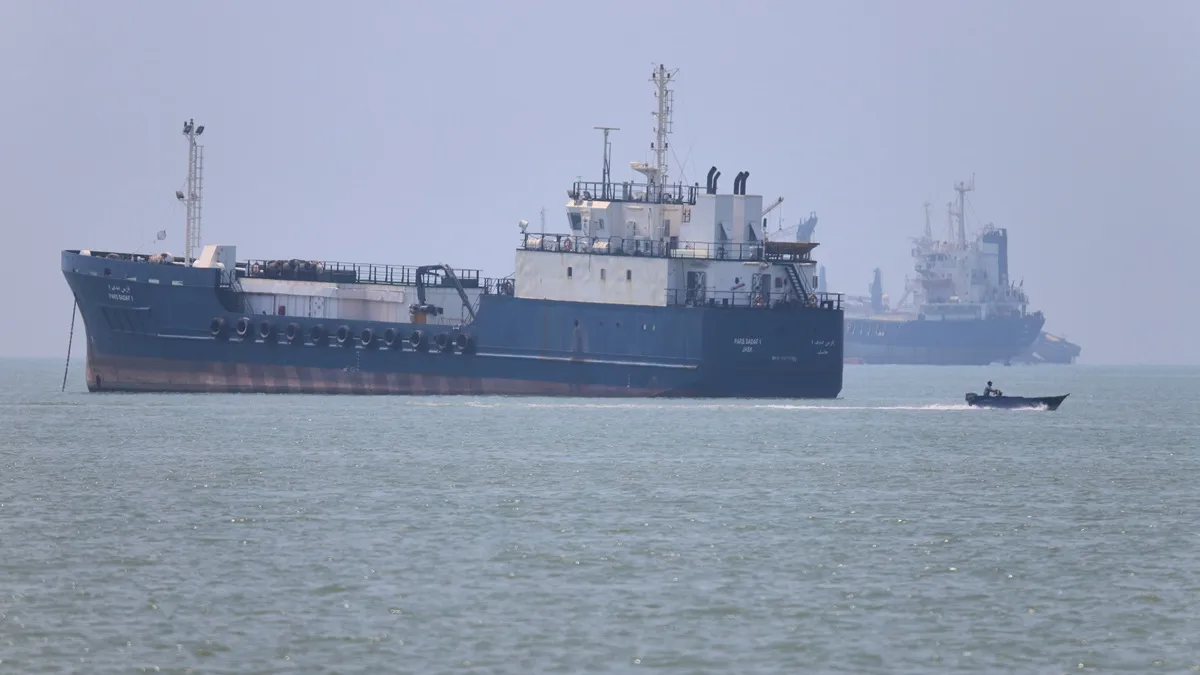
Tehran: Amidst the ongoing peace talks with America, Iran has once again adopted a tough stance. Khatam al-Anbia, head of Iran’s joint military command, has warned that all oil tankers and other ships passing through the Strait of Hormuz will now have to follow sea routes decided by Iran. If any ship deviates from its designated route or violates Iranian navigation rules, it could face immediate and strong military action. This statement by Iran has again increased the tension on one of the world’s most important energy routes.
Why did Iran suddenly issue this warning?
According to Iranian state media, this warning came at a time when US and Iranian officials held talks in Qatar in the presence of mediators a day earlier. However, Iran did not clarify why it issued such a strong statement. It is believed that Tehran was angered by the statement of the US Central Command (CENTCOM), in which it talked about ensuring “free movement of trade and maritime traffic” in the Strait of Hormuz after a meeting with regional countries.
What warning has Iran given to ships?
Iran’s military command has said that if any ship does not follow the prescribed sea route or ignores the navigational rules of the Islamic Republic of Iran, immediate and decisive action will be taken against it. The statement also said that if the navy of the US or its allies intervened in this matter, the Iranian military would respond swiftly and forcefully.
Why is the Strait of Hormuz so important?
The Strait of Hormuz is counted among the busiest maritime trade routes in the world. A large amount of crude oil and natural gas originating from the Gulf countries reaches different countries of the world through this route. A large part of the global energy supply depends on this route. Therefore, any kind of tension here can have a direct impact on the international oil market and the global economy.
What is the objection of America and Gulf countries?
Under the interim agreement, Iran had agreed to allow ships to pass without duty for 60 days, but it also said that it would decide the sea route for the ships and would also collect fees from them later. America and many Gulf countries have opposed this proposal. He says that control of any one country on international maritime routes cannot be accepted. Amidst this controversy, efforts are also being made to develop alternative sea routes near the coast of Oman.
Is maritime trade being affected?
Despite the tension, the movement of ships through the Strait of Hormuz has not stopped completely. According to maritime analysis company Lloyd’s List Intelligence, 258 ships passed through this route last week, which is much more than the previous week. However, experts say that the situation is still not normal. Ship operators face the challenge of following Iran’s instructions or adopting a US-backed alternative route. In such a situation, the possibility of tension increasing again in this area cannot be ruled out.