
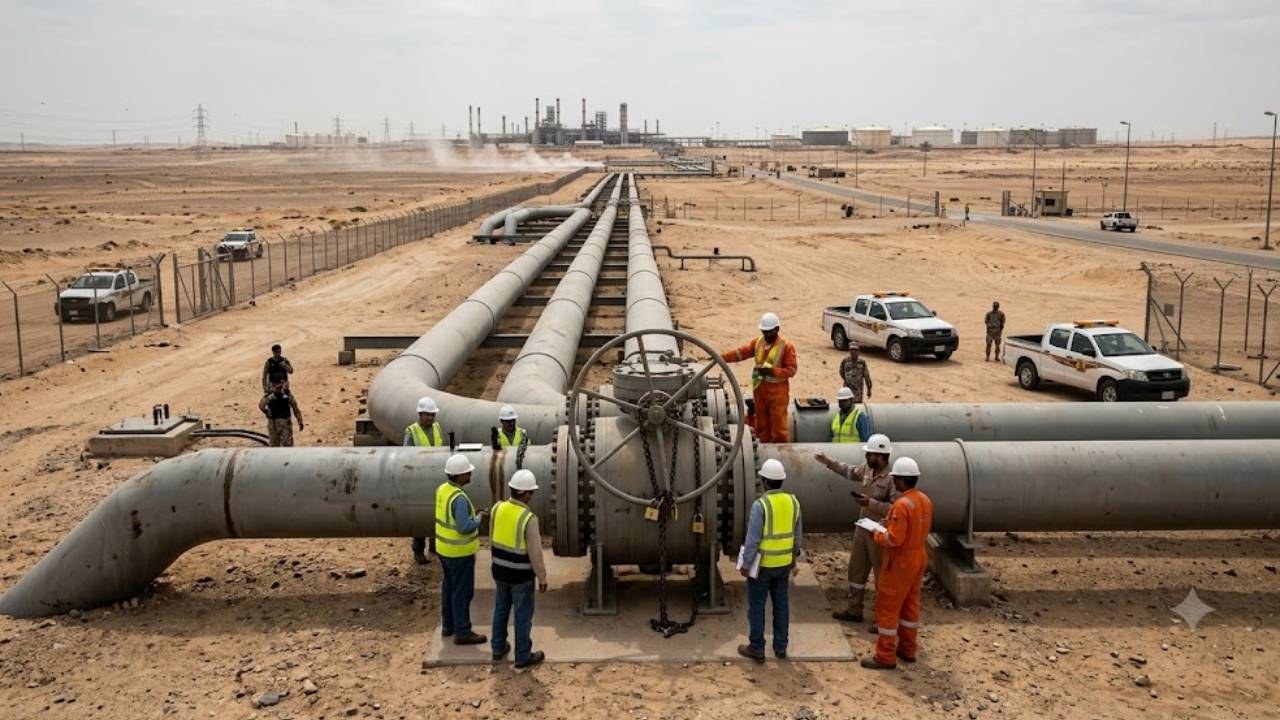
New Delhi: The precautionary closure of Saudi Arabia’s important East-West oil pipeline following drone attacks has intensified the turmoil in the global oil market. The price of Brent crude has increased by more than 3 percent to above $ 107-108 per barrel. This pipeline has been closed at a time when the movement of oil through the Strait of Hormuz is already badly affected due to the ongoing conflict with Iran.
Why did Saudi Arabia close the pipeline?
According to the Saudi Energy Ministry, pipeline-related facilities in the Riyadh and Medina areas were targeted in the drone strikes. Some people were injured in the attack and the pipeline infrastructure was damaged. Security and technical teams reached the spot and started assessing the damage, after which the operation of the pipeline was temporarily stopped.
According to reports, the drones used in the attack came from the direction of Iraq. This incident has increased pressure on Saudi Arabia as well as Iraq. There has been no immediate confirmation of responsibility from any organisation behind the attack.
Why is this pipeline important for Hormuz?
The approximately 1,200 kilometer long east-west pipeline connects Saudi Arabia’s eastern oil fields to Yanbu port on the Red Sea. Its biggest strategic advantage is that through it Saudi oil can be transported to the Red Sea without passing through the Strait of Hormuz.
Saudi Arabia had increased the use of this alternative route after the movement of oil from Hormuz was affected due to the war. According to some reports, in recent months, up to 5 million barrels of oil were being sent daily through this route.
How big is the concern over oil supply?
Figures differ in different reports regarding the pipeline’s capacity, but its potential capacity is said to be around 7 million barrels per day. According to Reuters, under the current situation, if the pipeline is not restarted within a few days, Saudi Arabia may have limited stocks left to continue exports from Yanbu. Due to prolonged shutdown, about 4 percent of global oil supply is at risk of being affected.
This is the reason why the market is keeping an eye on the repair and re-operation of the pipeline. It’s unclear how long it will take to completely repair the damage.
What does it mean if crude crosses $108?
The of pipeline closure has come at a time when the oil market is already under stress. The movement of ships in the Strait of Hormuz remains well below normal levels. According to Reuters, only a few ships were recorded passing through Hormuz on September 14, whereas on normal days much more commercial ships pass here.
Along with this, security risk has also increased in the Red Sea and Bab al-Mandeb region. In such a situation, the alternative routes available for oil have also come under pressure. As concerns about supply increased in the market, Brent crude jumped nearly 3 percent to $ 107.81 per barrel.
How much impact can it have on India?
India is among the world’s largest crude oil importers. Therefore, prolonged high prices in the international market may have an impact on the procurement cost and refining margins of Indian oil companies. If crude prices continue to rise, it is likely to impact petrol-diesel prices, transportation costs and inflation.
At present the biggest question is how soon Saudi Arabia’s pipeline restarts and when the movement of oil from Hormuz becomes normal. If the disruption on both fronts continues for a long time, the pressure on the global energy market may increase further.