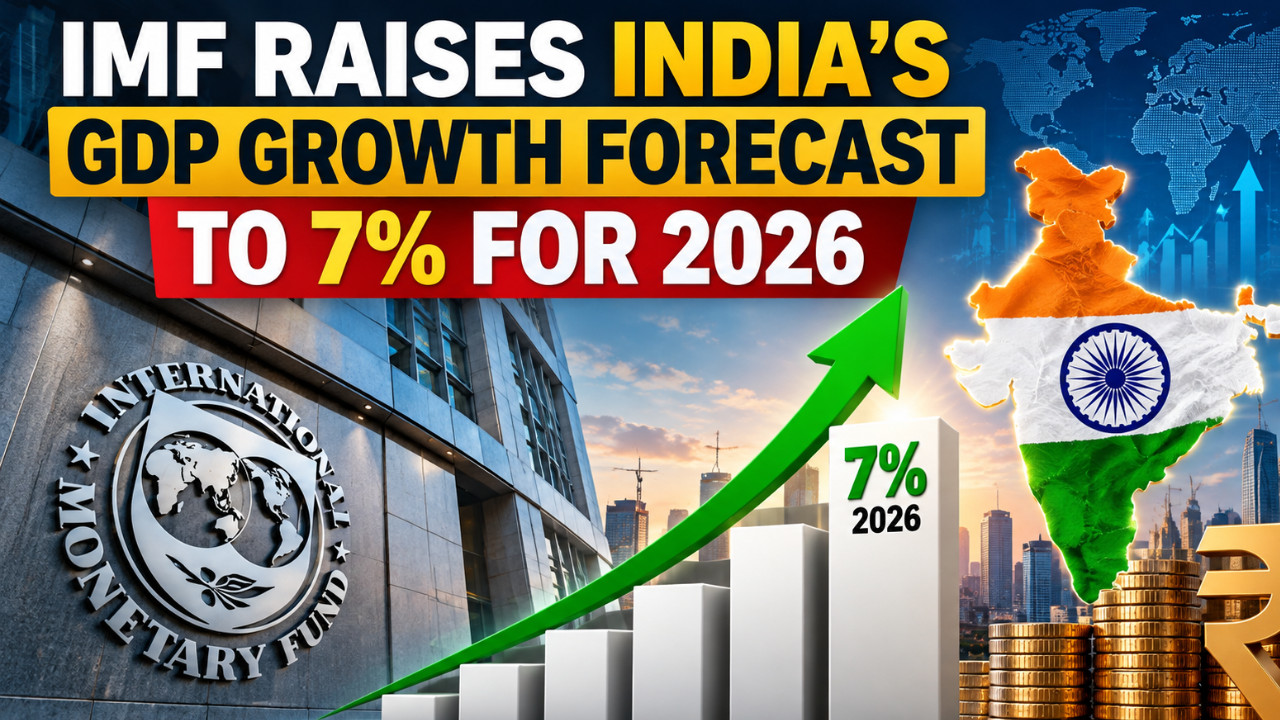
New Delhi: The International Monetary Fund (IMF) has increased its growth forecast for India’s economy. According to IMF’s World Economic Outlook report of October 2026, India’s GDP growth is estimated to be 7 percent in the year 2026. Earlier in July this estimate was 6.4 percent. This increase in India’s growth rate is considered important amid global economic slowdown, rising crude oil prices and international tension. In such a situation, the question arises that what factors are strengthening the Indian economy and what challenges may arise in future?
Why was India’s GDP growth forecast increased from 6.4% to 7%?
According to IMF, domestic demand and service sector have an important role in strengthening India’s economic growth. The market is getting momentum due to consumer purchases, increasing demand for services and expansion of economic activities in the country. Strong domestic consumption also helps India withstand global economic fluctuations.
How is domestic demand giving strength to the Indian economy?
The expansion of the consumer market and increase in service-related activities in India are supporting economic growth. When people spend on goods and services, it can also impact business, production and employment-related activities. The large youth population and growing market potential are also factors strengthening India’s economic potential.
What is India’s economic growth expected to be in 2027?
IMF has estimated India’s GDP growth to be 7 percent for 2027 also. This forecast suggests that India’s economic growth may remain strong despite global challenges. However, the actual growth rate will depend on domestic demand, investment, inflation and international economic conditions.
Where does India stand compared to China and the world economy?
According to IMF estimates, China’s economic growth rate could be 4.5 percent in 2026 and 4 percent in 2027. At the same time, global economic growth is estimated to be 3.1 percent in 2026 and 3.4 percent in 2027. Compared to these figures, India’s estimated growth rate of 7 percent shows its strong position.
What does the World Bank also say about India’s economy?
Domestic consumption is considered an important factor in assessing India’s economic prospects. Strong demand can boost activities related to trade, production and services. However, global economic uncertainty and energy market fluctuations may impact the growth rate of many countries, including India.
Why are rising crude oil prices a concern for India?
India imports a large part of its oil needs. In such a situation, the increase in crude oil prices in the international market may put pressure on the import bill and transportation costs. Its effect may also be visible on inflation. Therefore, to maintain the pace of economic growth, it is important to keep an eye on the changes in energy prices.
What impact can El Nino have on India’s economy?
El Nino conditions can affect the monsoon. If rainfall remains below normal, there is a possibility of increased pressure on agricultural production, rural incomes and food prices. Given the important role of the agriculture sector in India, the performance of monsoon remains important for the economy.
Will India be able to maintain the pace of economic growth in future also?
IMF’s increased estimate is a positive sign for India’s economy. Nevertheless, to maintain this growth rate, it will be necessary to strengthen domestic demand, control inflation, encourage investment and prepare to deal with global risks. In the coming times, crude oil prices, monsoon and global trade situation can play an important role in deciding the economic direction of India.