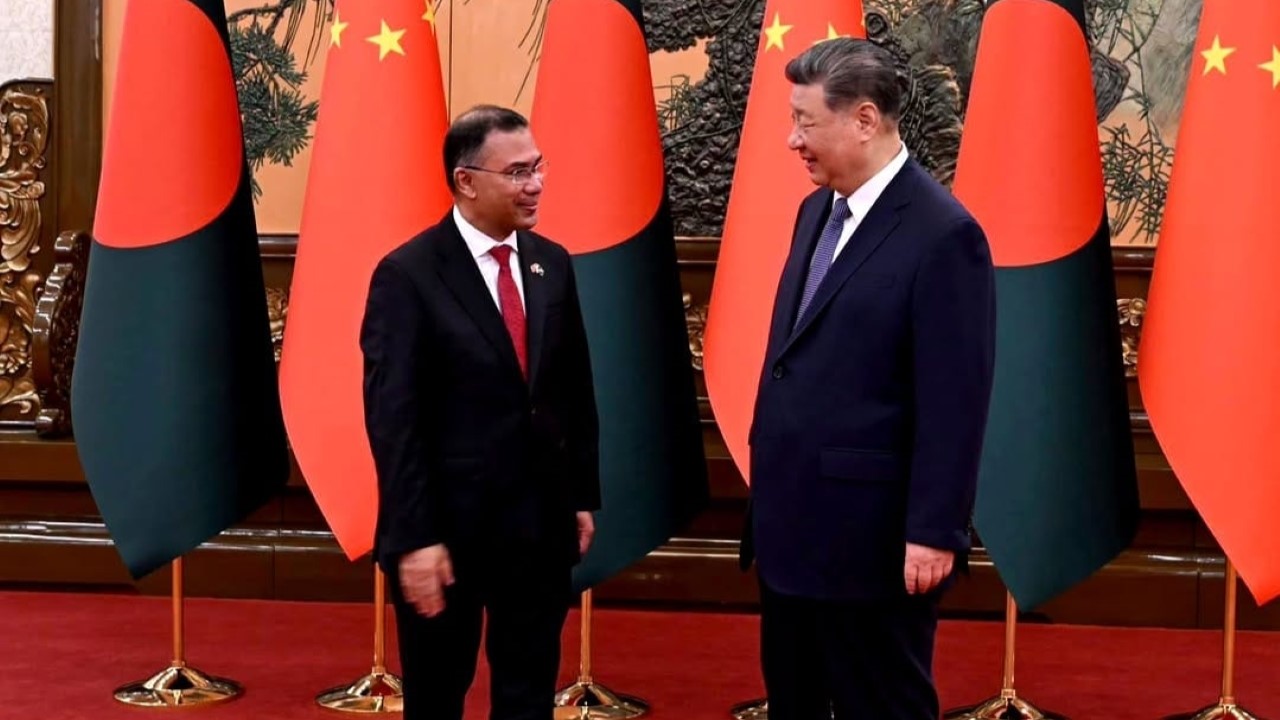
New Delhi: The new economic agreement between Bangladesh and China has increased the stir in the strategic politics of South Asia. During the meeting of Bangladesh Prime Minister Tariq Rahman and Chinese President Xi Jinping in Beijing, it was agreed to develop a Special Economic Zone near Mongla Port. This is the same project, which was earlier to be developed in collaboration with India. However, after the change of power, Dhaka cancelled that proposal and now this responsibility has been handed over to the Chinese government company. This decision is being seen as China’s growing presence in the Indian Ocean region and a new strategic challenge for India.
Why is Mongla Port important for India?
Mongla is the second largest seaport of Bangladesh and its strategic location in the Bay of Bengal is considered very important. India has been trying to strengthen its presence in the region for a long time through economic and infrastructure projects. If this project had remained in the hands of India, then trade contacts between Eastern India and Bangladesh could have got a new impetus. Now China’s entry into this region is expected to affect the regional balance of power.
Will China’s hold in the Indian Ocean become stronger?
Experts believe that the Mongla project is part of China’s broader strategy under which it is expanding its economic and strategic influence in the Indian Ocean region. Earlier, China had made big investments in Gwadar Port of Pakistan, Hambantota Port of Sri Lanka and Djibouti of Africa. Now with the development of the economic zone in Mongla, its presence in the Bay of Bengal can also be strengthened.
How much will the Belt and Road Project benefit?
During the meeting, President Xi Jinping stressed increasing cooperation with Bangladesh under the Belt and Road Initiative (BRI). The two countries also agreed to develop industrial and economic zones and pursue infrastructure projects in Chittagong. China also reiterated its commitment to enhance long-term economic cooperation with the new government of Bangladesh.
Why is China’s increasing activism important on Teesta project?
China has also assured cooperation in Teesta river management and redevelopment project. This project is considered sensitive for India because Teesta River has been an important issue of water sharing between India and Bangladesh for a long time. There are more than 50 common rivers between the two countries and differences have arisen from time to time over water management. In such a situation, China’s increasing role in this project can give rise to new strategic discussions.
What could be the impact on India’s strategy?
Foreign policy experts believe that this decision of Bangladesh can become a challenge for India at both diplomatic and strategic levels. While trade, connectivity and security cooperation between India and Bangladesh remain strong, increased Chinese investment is likely to further intensify competition in the region. In the coming times, New Delhi may have to give further impetus to economic partnerships and connectivity projects with its neighboring countries so that strategic balance can be maintained in the Indian Ocean region.