New Delhi: Those who break traffic rules on the road are in for a tough time! From taking action against those driving in the wrong direction and cracking down on red-light violators, to teaching traffic discipline to those riding without helmets—the East Range Traffic Police is tackling the situation on two fronts: strict enforcement and public awareness. The message of this campaign is clear: “Break the rules and you will be fined; follow the rules and your journey will be smooth.”
Between July 7 and October 25, 2026, the East Range Traffic Police recorded 8,982 traffic violations across 42 intersections and key locations as part of their ‘Traffic School’ (Traffic Pathshala) campaign. These included 4,231 instances of riding without a helmet, 2,010 cases of driving in the wrong direction, 872 cases of triple-riding, 343 instances of jumping red lights, and 1,526 other types of violations. The data reveals that the biggest challenge in enforcing traffic discipline is the negligent attitude of two-wheeler riders toward wearing helmets. However, the police’s goal is not merely to issue fines, but to foster a change in habits. To this end, 614 awareness sessions were conducted, educating 7,780 individuals about traffic rules, while 616 people who followed the rules were rewarded—setting a positive example for others to emulate.
Drive in the wrong direction and face action; break the rules and be held accountable!
The compiled data from the traffic police’s extensive enforcement operations highlight the strict measures being taken. According to the available records, 833 First Information Reports (FIRs) were filed and 61,932 e-challans were issued for driving against the flow of traffic. Additionally, 63,941 cases were recorded for riding/driving without a helmet, 195,226 for illegal parking, 3,754 for driving under the influence, 3,231 for the use of prohibited tinted film on vehicle windows, 5,800 for red-light violations, and 8,077 for triple-riding (carrying three people on a two-wheeler). These figures, drawn from comprehensive enforcement data covering a specific period, demonstrate that action against traffic violations is not confined to just a few intersections. Practices such as illegal parking and driving against the flow of traffic reduce road capacity and exacerbate traffic congestion; furthermore, the resulting prolonged idling or slow movement of vehicles can significantly worsen pollution.
Spreading Awareness: From Schools to Intersections
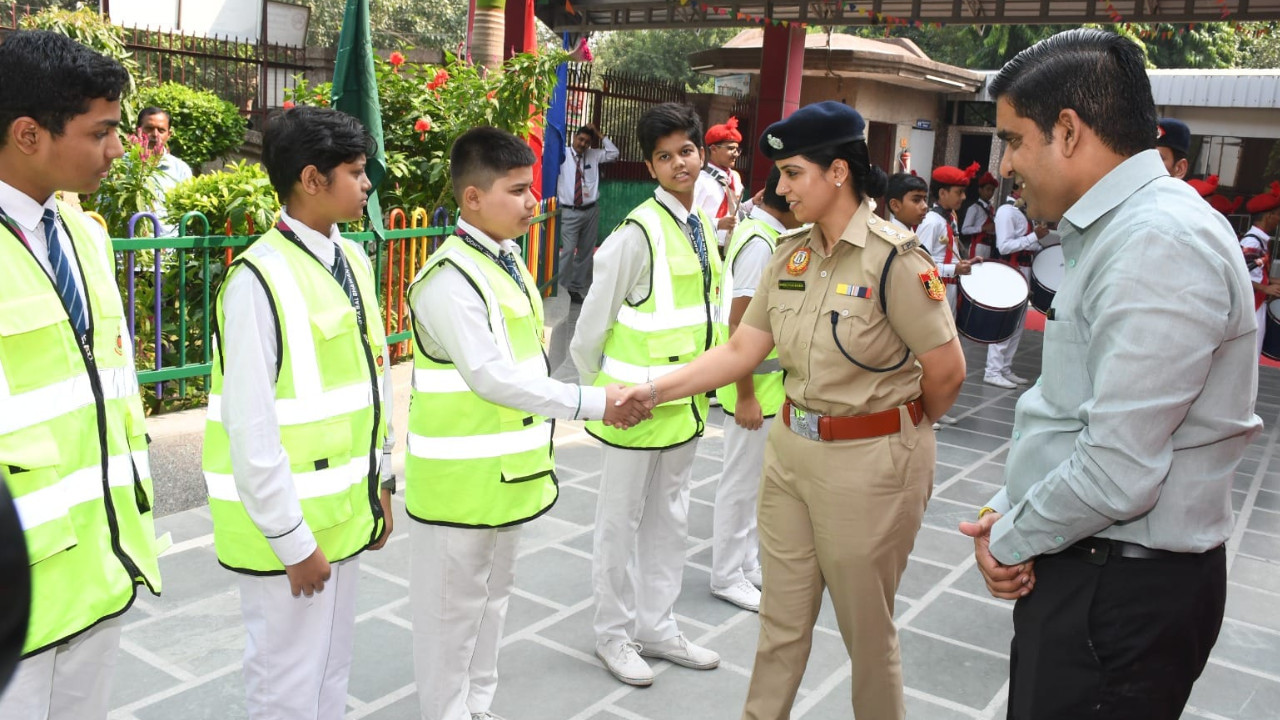
The Traffic Police of the Eastern Range have recognized that true road safety begins not with the issuance of fines, but with the cultivation of responsible habits. Guided by this philosophy, an awareness campaign was conducted from January 1 to October 25, 2026, utilizing schools, major intersections, street plays, and dedicated traffic awareness vans. During this period, 102 programs were organized in schools, reaching 12,608 students. Through six street plays, the message was conveyed to 1,893 road users, including pedestrians and public transport drivers. Furthermore, 29,910 individuals were reached through 222 programs held at various intersections, while an additional 3,732 people were engaged through 14 sessions conducted via traffic awareness vans. These programs emphasized wearing helmets, driving in the designated direction, obeying traffic signals, ensuring the safety of pedestrians, and maintaining discipline on the road. The police aim to foster a culture where traffic rules are followed—not merely out of fear of fines, but out of a sense of responsibility to protect one’s own life and the lives of others.
A campaign for road safety improvements through public participation
Addressing traffic congestion and disorder on the roads cannot be achieved by the police alone; it requires the active participation of local citizens, market associations, and relevant government departments. With this objective, the Traffic Police of the Eastern Range held a series of meetings between April 5 and October 25, 2026, involving Resident Welfare Associations (RWAs), Market Welfare Associations (MWAs), and various government agencies. Specifically, 58 meetings were held with RWAs, 31 with MWAs, and 38 with other agencies—including the Municipal Corporation, the Public Works Department (PWD), and the Delhi Metro Rail Corporation (DMRC)—bringing the total to 127 meetings. According to available records, 160 suggestions were received; 143 of these have been acted upon, while 16 were forwarded to the relevant agencies. (Note: As the sum of these two categories is 159, the status of one remaining suggestion requires further clarification.) Through these meetings, issues such as local traffic congestion, improper parking, poor road conditions, signage, and overall traffic management were identified, paving the way for targeted solutions.
Signal-Free Roads: Boosting Speed While Tackling Congestion and Pollution
Efforts to improve traffic flow in East Delhi have led to the implementation of a “signal-free” system on several routes. These include the stretch on Road No. 57 from Bihari Colony to Karkadi Mor, the route from Karkadi Mor to Laxmi Nagar, and the section from Shastri Park up to the point before Khajuri Chowk. Additionally, projects covering the stretch from Apsara Border to Shahdara Flyover and from Kashmiri Lal Batti to Karkardooma Blinker are currently underway. These initiatives aim to reduce unnecessary vehicle stops, enhance traffic flow, and curb both fuel consumption and pollution caused by traffic congestion. However, alongside the implementation of a signal-free system, it remains equally essential to ensure the presence of safe pedestrian crossings, clear signage, and effective speed control measures. Blueprint for Improvements at Anand Vihar Bus Terminal
The Anand Vihar Inter-State Bus Terminal (ISBT)—located in one of East Delhi’s busiest traffic zones—has become a priority for the traffic police. Given the challenges—such as bus movement, queues of auto-rickshaws and taxis, improper parking, and pedestrian safety—several corrective measures have been proposed. These include the construction of three new pedestrian footbridges to ensure safe movement for pedestrians, a technical study to optimize the use of the bus terminal premises and designated bus parking areas, and the identification of a suitable location in the Kaushambi area (Uttar Pradesh) for bus stops. It has also been suggested that a new site be found to relocate the Kaushambi bus terminal away from Chaudhary Charan Singh Marg, which would help reduce traffic congestion on the main road caused by buses.
Other proposed measures include repairing the damaged central median railings on Road No. 56, installing directional and ‘no-parking’ signs at the entrance, creating dedicated lanes for auto-rickshaws and taxis, and installing speed-calming measures (such as speed breakers or rumble strips) throughout the bus terminal area.
Additionally, recommendations have been made to install barriers where necessary, repair potholes, repaint road markings (including pedestrian crossings), and install reflective signage.
The improvement plan also encompasses curbing the unauthorized boarding and alighting of passengers along Chaudhary Charan Singh Marg, regulating the movement of vehicles at toll/payment booths, controlling bus parking outside designated zones, and ensuring more efficient use of space allocated for parking idle buses.
A joint operation with the Municipal Corporation and local police has been proposed to remove encroachments and address illegal parking. To tackle traffic obstructions, broken-down vehicles, and improper parking, the deployment of three motorcycle patrol teams and a traffic crane has been suggested. Emphasis has also been placed on deploying Delhi Transport Corporation (DTC) traffic marshals to streamline the entry and exit of buses during peak hours, as well as regulating the movement of auto-rickshaws, e-rickshaws, and taxis near the entrances of Metro stations and bus terminals. These proposals represent corrective measures to be implemented through coordination between the traffic police and relevant agencies; their ultimate success will depend on effective execution and regular monitoring.
Focus on Road Safety under the leadership of DCP Shweta Singh Chauhan
Led by Shweta Singh Chauhan, Deputy Commissioner of Police (Traffic) for the Eastern Range, this initiative integrates enforcement, public awareness, and traffic management. The police aim to reduce road accidents, ensure smooth traffic flow, and foster a sense of responsibility among citizens regarding traffic rules. Shweta Singh Chauhan has urged citizens to wear helmets, avoid driving against the flow of traffic, obey red lights, refrain from driving under the influence, and avoid parking vehicles haphazardly on the roads. She has also invited the public to share suggestions for resolving local traffic issues, enabling the police and relevant departments to implement practical improvements. The true success of this transformation on the roads of East Delhi will be realized when every driver views traffic rules not as a burden, but as a protective shield—for while arriving late at one’s destination is acceptable, risking someone’s life due to negligence is not.